
| Review | https://doi.org/10.21041/ra.v15i2.813 |
Enhancing concrete sustainability: use of ground glass pozzolans as a supplementary cementitious material in low carbon concrete
Mejorando la sostenibilidad del concreto: uso de puzolanas de vidrio molido como material cementante suplementario en concreto de bajo carbono
Aumentando a sustentabilidade do concreto: uso de pozolanas de vidro moído como material cimentício suplementar em concretos de baixo carbono
1 Professor and Director of SMaRT Lab Glenn Department of Civil Engineering School of Civil Engineering and Environmental Engineering and Earth Sciences Clemson University Clemson, South Carolina, USA.
*Contact author: prangar@clemson.edu
Received: 04/11/2024
Revised: 18/03/2025
Accepted: 25/04/2025
Published: 01/05/2025
| Cite as: Rangaraju, P. (2025), “Enhancing concrete sustainability: use of ground glass pozzolans as a supplementary cementitious material in low carbon concrete”, Revista ALCONPAT, 15 (2), pp. 92 – 107, DOI: https://doi.org/10.21041/ra.v15i2.813 |
Abstract
This review summarizes the availability and processing of glass waste and highlights its impact on the fresh and hardened properties of concrete. Concrete industry is increasingly seeking sustainable supplementary cementitious materials (SCMs) to partially replace Portland cement, as traditional SCMs like fly ash and slag face declining availability. SCMs enhance concrete’s mechanical and durability properties while reducing its carbon footprint. Processed glass waste has emerged as a promising alternative pozzolan, supported by extensive research and field applications. In response, ASTM developed C1866/C1866M-20, a standard specification for ground glass pozzolan in concrete. The potential of ground-glass pozzolans as viable supplementary cementitious materials (SCMs) for producing low-carbon concrete is also discussed.
Keywords: ground glass pozzolans, supplementary cementitious materials, low-carbon materials.
1. INTRODUCTION
The ubiquitous availability of Portland cement concrete, along with its tunable mechanical and durability properties to meet a range of physical and environmental loading requirements and its versatility in application, makes it the premier choice of materials for construction of infrastructure in modern civilization. However, Portland cement, the principal binding agent in concrete, is also known to be responsible for contributing approximately 8% of the global emissions at 2.8 G Tons/y (Ellis et al., 2019).
Among the strategies that have been explored to reduce the environmental impact of concrete construction are the development of alternative low-carbon binders to completely replace Portland cement and the use of supplementary cementitious materials (SCMs) for partial replacement of Portland cement. These strategies have been extensively studied and widely experimented in the industry. Although low-carbon binders such as alkali-activated binders have been developed, their use in the construction industry is limited to niche projects due to limitations imposed by their inherent characteristics such as need for aggressive alkaline activators, need for additional processing steps needed beyond the bounds of the conventional construction operations and lack of adequate specifications at the present time, among others.
Partial replacement of Portland cement with SCMs to reduce the environmental impact is a more widely practiced and successful strategy. The effectiveness of this approach also stems from the fact that most SCMs, such as fly ash and slag are industrial by-products that have little use for other purposes, and if not used as SCMs in concrete, need expensive disposal strategies. Furthermore, concretes containing SCMs are often found to be superior in their mechanical and durability properties compared to concrete mixture without SCMs. Considering that most SCMs are industrial by-products, their use in concrete inherently reduces the carbon footprint of concrete and provides a pathway for their upscaling them rather than disposing them in landfills or ponds.
In recent years, the availability of traditional SCMs such as fly ash and slag has increasingly become limited in the United States as the industries that produce these materials are undergoing significant process changes. The production of fly ash from coal-burning power plants is decreasing as renewable energy sources and natural gas-powered plants are replacing the traditional coal-based power plants. Similarly, iron and steel production is increasingly dominated by recycling efforts and as a result the blast furnace slag production is significantly reduced. Consequently, there is an emerging need to find suitable alternatives to traditional SCMs for use in the concrete industry. Therefore, the objective of this short review is to evaluate the viability of ground glass pozzolans (GGPs) as sustainable supplementary cementitious materials in concrete. The paper provides a comprehensive overview of the processing, classification, and performance of GGPs including their mechanical properties, durability characteristics, and environmental benefits with the aim of promoting their broader adoption in the development of low-carbon concrete.
2. GROUND GLASS AS SUPPLEMENTARY CEMENTITIOUS MATERIAL
Glass is a widely produced material for application in a range of industries. The most common type of glass is the soda-lime glass, which is typically used in the production of containers and flat glass. The manufacturing of soda-lime glass consists of combining commonly available raw materials – silica sand (SiO2), soda ash (Na2CO3) and limestone (CaCO3) into an intimate mixture followed by heating the mixture to about 1500℃ to melt the raw materials and produce glass. The molten glass is then transformed typically into either container glass or flat glass. Of slightly different chemical composition (much lower alkali content and higher lime and alumina content) is E-glass. E-glass is typically drawn into thin filaments and woven into fiber strands for use in manufacturing glass-resin based composites. The industry estimate of Global Warming Potential (GWP) of glass is reported at 0.66 tons of CO2e per ton of glass produced (CarbonCloud, 2024).
Vast majority of waste glass that is produced in the United States is soda-lime glass. Of the 12.25 million tons of glass manufactured in the United States in 2018, only 3.06 million tons of glass was recycled, and 7.55 million tons of container glass was directly landfilled with the remainder of 1.64 million tons landfilled after combustion with energy recovery (United States Environmental Protection Agency, 2024). Figure 1 shows historical trend in the production and disposal of glass in the United States from 1960 through 2018 (United States Environmental Protection Agency, 2024).
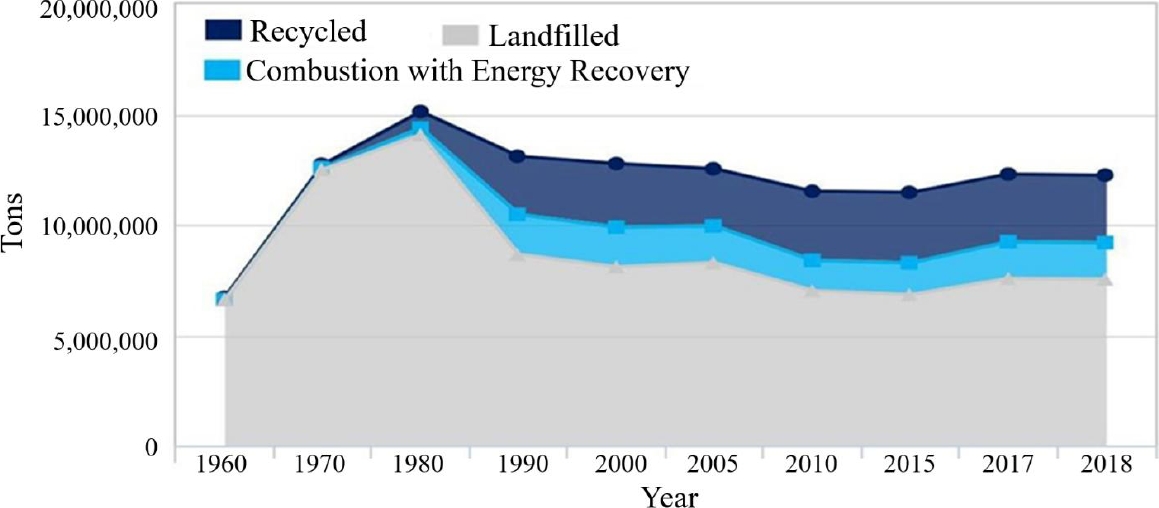
Figure 1. Historical Trend in Glass Waste Management: 1960 – 2018. (United States Environmental Protection Agency, 2024)
Recycling glass can conserve a large quantity of the raw materials needed for production of new glass; for every ton of glass recycled, 590 kilograms of sand (SiO2), 186 kilograms of soda ash (Na2CO3), 172 kilograms of limestone (CaCO3) and 72 kilograms of feldspar (NaAlSi3O8) are conserved (Glass Recycling, 2024). Though the amount of glass waste recycled yearly has steadily increased from 750 thousand tons in 1980 to more than 3 million tons in 2018, the rate of glass recycling remains far below the rate of glass production (United States Environmental Protection Agency, 2024), largely due to obstacles encountered in the collection streams such as co-mingled glass of different colors and presence of contaminants such as metal, soil, paper, organics and other chemical contaminants. Many recycling companies attempt to remedy these issues by sorting waste glass bottles into specific colors or accepting only uncontaminated glass. Figure 2 shows a glass recycling facility where the color sorted glass cullet is stored at the job site in large piles. Due to sizable obstacles to the glass collection and recycling processes, the rate of waste glass recycling has been unacceptably low thus far in the US (31%), although the recycling in other countries, particularly in Europe is higher, 52% currently, and projected to reach 90% by 2030 (Nature Editorial, 2021). Alternative methods must be considered for reducing the high volume of waste glass disposed of in landfills.
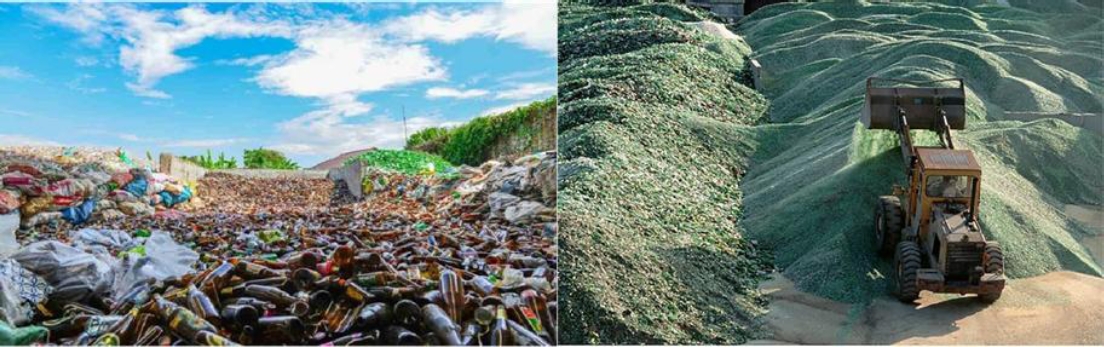
Figure 2. Waste glass collection facility and cullet management at a glass recycling facility (Glass Recycling, 2024; Nassar and Soroushian, 2011)
Using waste glass as an SCM in concrete not only avoids disposing of it in landfills but also reduces the clinker content of concrete and hence improves the sustainability of concrete. Also, glass-based SCMs have the potential to improve not only the mechanical and durability of concrete, but also its sustainability. Based on a preliminary estimate of global warming potential (GWP) of ground glass pozzolan (GGP), one ton of processed ground glass pozzolan (GGP) was found to have a GWP of 56 kg CO2e as compared to a 922kg CO2e of Portland cement (Kaminsky et al., 2020). Consequently, significant reduction in GWP of concrete mixtures can be realized in concrete mixtures where Portland cement is partially replaced with GGP.
3. CHEMISTRY AND PROCESSING OF GROUND GLASS POZZOLANS
Considering that waste glass is a widely available resource that is amorphous in nature with consistent chemical composition, this material can serve as valuable SCM for use in concrete. Container and flat glass, typically derived from soda-lime glass, contain SiO2 and CaO contents of approximately 70% and 10%, respectively, while Al2O3 content is relatively negligible. However, the alkali level (Na2O and K2O) of these glasses range between 13% to 14% Na2Oeq (United States Environmental Protection Agency, 2024; Glass Recycling, 2024; Kaminsky et al., 2020). In comparison, fiber glass, which is typically made from E-glass, contains SiO2 and CaO contents of 60% and 21%, respectively, while the Al2O3 content is typically about 12.5% and the alkali content of E glass is typically less than 1% Na2Oeq (Kaminsky et al., 2020). The amorphous nature of soda-lime glass and E-glass is evident from the XRD analysis results shown in Figure 3(a) and 3(b), respectively. Clearly, the composition of glasses is very much in alignment with what would be considered as a pozzolanic material, although in case of soda-lime glass, the alkali level of glass may need to be carefully considered, where precautions against alkali-aggregate reactions are necessary.
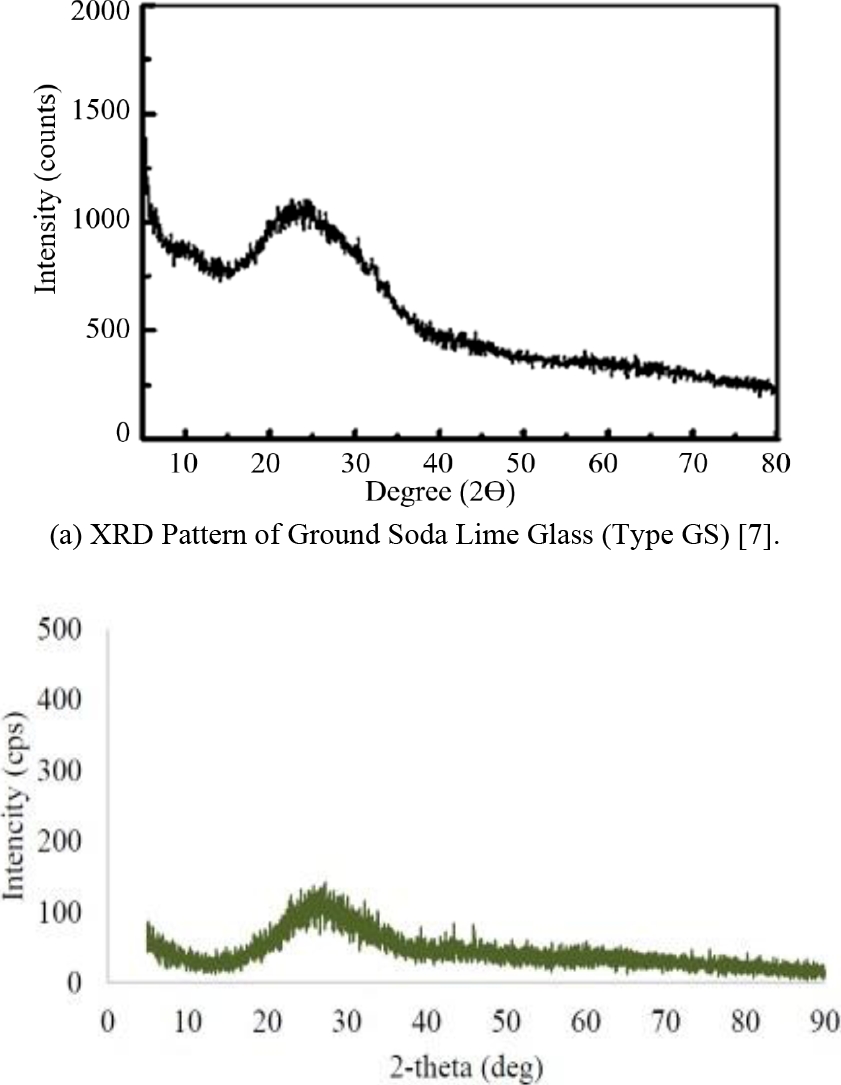
Figure 2. X-Ray Diffraction Patterns of (a) Type GS, and (b) Type GE Ground Glass Pozzolans.
Typically, majority of waste glass is collected through municipal collection systems and processed through Material Recovery Facilities (MRF) in the United States. The processing of waste glass consists of cleaning the waste glass to remove organics, paper and metal from glass, followed by grinding it to obtain a fine glass powder. The glass cleaning process may consist of one or more methods, which typically include wet washing to remove organics from the glass; mechanical abrasion, attrition, as well as thermal incineration to remove paper and other hard-to-remove organics from the glass surface. In addition, non-glass components such as ferrous metals in the waste stream may be removed through magnetic and eddy current separation technologies (Smith et al., 2019). The principal objective of cleaning glass waste is to reduce the loss-on-ignition (LOI) value to a level that will not have deleterious impact on concrete performance.
The cleaning operation is followed by grinding the glass waste in a close-looped system with air- classification method to reduce the size to a fine particulate system to improve its reactivity as a pozzolan as well as achieve a particle size distribution that is compatible with Portland cement for effective packing in concrete.
4. ASTM C1866: STANDARD SPECIFICATION FOR GGP FOR USE IN CONCRETE
Research findings from lab studies (Dezfouli, 2017; Smith et al., 2019; Tagnit-Hamou and Bengougam, 2012; Nassar and Soroushian, 2012; Shayan and Xu, 2006; Soliman, et al. 2016; Schwarz et al., 2008; Afshinnia and Rangaraju, 2015; Afshinnia and Rangaraju, 2016; Afshinnia and Rangaraju, 2015; Amer et al., 2022; Torres-Carrasco et al., 2015; Cyr et al., 2012; Krstic and Davalis, 2018) and field studies (Nassar and Soroushian, 2011; Shayan and Xu, 2006; Krstic and Davalos, 2019) of using ground glass as a SCM in concrete, were used as a basis by ASTM subcommittee C 09.24 on Supplementary Cementitious Materials to develop an industry standard ASTM C1866 for use of ground glass pozzolans in concrete (ASTM C1866/C1866M-20, 2020). This standard recognizes two types of ground glass pozzolans – Type GS (soda-lime glass) and Type GE (E-glass), with specific threshold limits for chemical requirements, amorphous content of the glass, as well as physical requirements for its use as supplementary cementitious materials in concrete (ASTM C1866/C1866M-20, 2020). Table 1 shows the typical chemical and physical requirements of ground glass pozzolans per ASTM C1866.
Table 1. Chemical and Physical Requirements of Ground Glass Pozzolans (ASTM C1866/C1866M-20, 2020).
| Chemical Properties | Chemical Requirements | Physical Properties | Physical Requirements | |
| Type GS | Type GE | Type GS and GE | ||
| SiO2, min % | 60.0 | 55.0 | Fineness (Amount retained when wet sieved on No. 325 sieve (45 microns), max % | 5 |
| Al2O3, max % | 5.0 | 15.0 | ||
| CaO, max % | 15.0 | 25.0 | Strength Activity Index with Portland Cement, 7 Days, min % of control | 75 |
| Fe2O3, max % | 1.0 | 1.0 | ||
| SO3, max % | 1.0 | 1.0 | ||
| Na2Oeq, max % | 15.0 | 4.0 | ||
| LOI, max % | 0.50 | 0.50 | Strength Activity Index with Portland Cement, 28 Days, min % of control | 85 |
| Moisture Content, % | 0.50 | 0.50 | ||
| Amorphous Glass Content, min % | 95 | 95 | - | - |
The establishment of ASTM C1866 marks a significant milestone in recognizing ground glass pozzolans as viable SCMs. The clear classification between Type GS and Type GE enhances quality control and encourages industrial use. However, the standard still lacks detailed guidance on mitigating alkali-silica reaction for high-alkali GGPs (especially Type GS), which remains a concern in reactive aggregate systems. Future revisions should aim to incorporate performance-based ASR mitigation thresholds or recommend ternary blend guidelines. As industry adoption grows, the focus is expected to shift toward performance-based standards and lifecycle carbon metrics.
5. PERFORMANCE OF MORTAR AND CONCRETE MIXTURES WITH GROUND GLASS POZZOLANS
Numerous lab and field studies have been conducted to study the impact of using Type GS and Type GE ground-glass pozzolans as SCMs in mortars and concrete (Nassar and Soroushian, 2011; Dezfouli, 2017; Smith et al., 2019; Tagnit-Hamou and Bengougam, 2012; Nassar and Soroushian, 2012; Shayan and Xu, 2006; Soliman et al., 2016; Schwarz et al., 2008; Afshinnia and Rangaraju, 2015; Afshinnia and Rangaraju, 2016; Krstic and Davalos, 2019; Afshinnia and Rangaraju, 2015; Amer et al., 2022; Torres-Carrasco et al., 2015, Cyr et al., 2012; Krstic and Davalis, 2018). Typically, the dosage level of GGPs used in these studies ranged between 10% to 40% by mass replacement of Portland cement. The use of GGPs in ternary blends with either fly ash or slag has also been reported (Kaminsky et al., 2020; ASTM C1866/C1866M-20, 2020; Afshinnia and Rangaraju, 2015). The following general observations highlight the impact of GGPs on the fresh and hardened properties of mortar and concrete mixtures.
5.1 Flow
In terms of fresh properties, mixtures containing Type GE and Type GS GGPs showed improved flow behavior compared to control mixture across a range of cement replacement levels (Dezfouli, 2017). Also, GGPs performed better than metakaolin (MK) at comparable cement replacement levels. Figure 3 shows the flow behavior of mixtures containing Type GE, Type GS ground glass pozzolans and MK at 20% cement replacement level at a constant water-binder ratio representing the normal consistency for control mixture. In these mixtures, water-reducing admixture was not employed. The performance of both GGPs is significantly better than that of mixture with MK and even that of control mixtures. The primary reason for this behavior is that GGPs are non-porous materials with little moisture absorption. Further, the conchoidal fracture surfaces of glass particles serve as slip planes and allow for easier movement of particles when the mixture is subjected to a shear stress. Figure 4 shows the typical morphology of ground glass particles (Cyr et al., 2012). In comparison, SCMs such as MK show significantly lower flow due to moisture absorption. The benefit of using GGPs in improving flow is evident even compared to control mixtures.
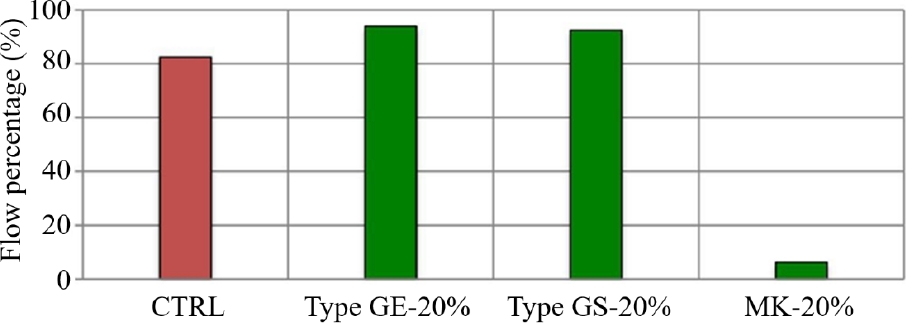
Figure 3. Flow behavior of Mortars with 20% Dosage of Ground Glass Pozzolans (Type GE and Type GS) and Meta-Kaolin (Dezfouli, 2017).
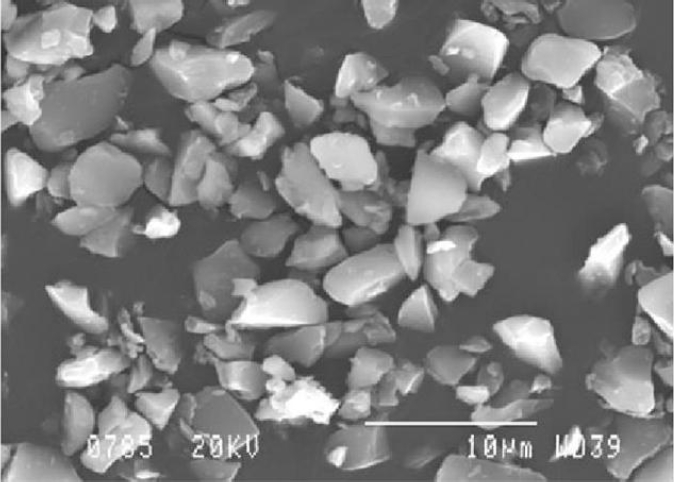
Figure 4. Morphology of ground Type GS glass pozzolan (Cyr et al., 2012).
5.2 Strength Activity Index
Dezfouli (2017) and Afshinnia (2015, 2016) investigated the strength activity index of Type GS and Type GE GGPs and compared it to metakaolin as a reference. In these studies, cement replacement dosage levels of 10%, 20% and 30% by mass were evaluated (Dezfouli, 2017; Afshinnia and Rangaraju, 2015; Afshinnia and Rangaraju, 2016). From the data shown in Figure 5, it is evident that Type GE and Type GS GGPs meet the minimum strength activity index of 85% at 28 days per ASTM C1866 at 10% and 20% replacement levels. However, Type GE GGP met the requirement even up to 30% replacement level. Also, Type GE GGP showed better performance compared to Type GS GGP at equivalent dosage levels, the principal reason for which is due to the difference in the fineness of the two pozzolans. In these studies, it was observed that MK and Type GE pozzolan were finer materials with a d50 of 1.5 and 7 microns, respectively while Type GS pozzolan had a d50 of 17 microns. Mixtures with MK outperformed both Type GS and Type GE GGPs at 10% and 20% cement replacement level.
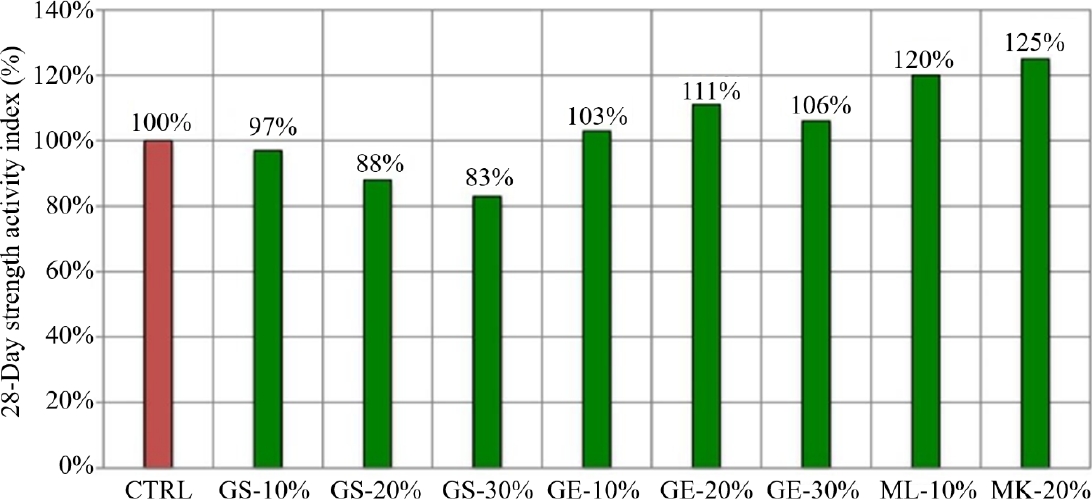
Figure 5. Strength Activity Index of Mortar Mixtures Containing Type GE, GS and MK pozzolans at 28 days (Dezfouli, 2017).
The lack of adequate workability in mixtures with 30% MK prevented it from being considered in the strength activity index tests.
5.3 Pozzolanic Reactivity
Pozzolanic reactivity of GGPs and metakaolin (MK) at 20% dosage level using thermogravimetric analysis were studied by Dezfouli (2017). The results from this study are shown in Figure 6. The CH content of all the mixtures were normalized with respect to the cement content in the mixtures, so that the dilution effect of replacing Portland cement is accounted for. From these results it is evident that MK is far more effective in its pozzolanic reaction compared to both GGPs at 20% replacement level at both 28 and 56 days. However, GGPs do show slightly improved pozzolanic behavior at 56 days compared to 28 days. It should be noted that while the CH content of mixtures with pozzolans is predictably lower than control mixture, i.e., due to a combination of dilution and pozzolanic effects, the likelihood of nucleation effect of fine pozzolans on accelerated hydration of Portland cement is inherently embedded in these experiments, although not quantified. Therefore, the CH reduction at any age is a net effect of the difference between higher CH content due to the nucleation effect in presence of finer pozzolans and the reduction in CH content caused by a combination of the dilution and pozzolanic effects of pozzolans. Furthermore, the pozzolanic reactivity is a function of the fineness of the pozzolans. In this study the average particle size (d50) of Type GS pozzolan was reported as 17 microns, while Type GE pozzolan and MK were reported as 7 and 2 microns, respectively, which also explains the relative differences across the results from the three pozzolans (Dezfouli, 2017). The results from the strength activity index tests shown in Figure 5 corroborate the findings from results shown in Figure 6.
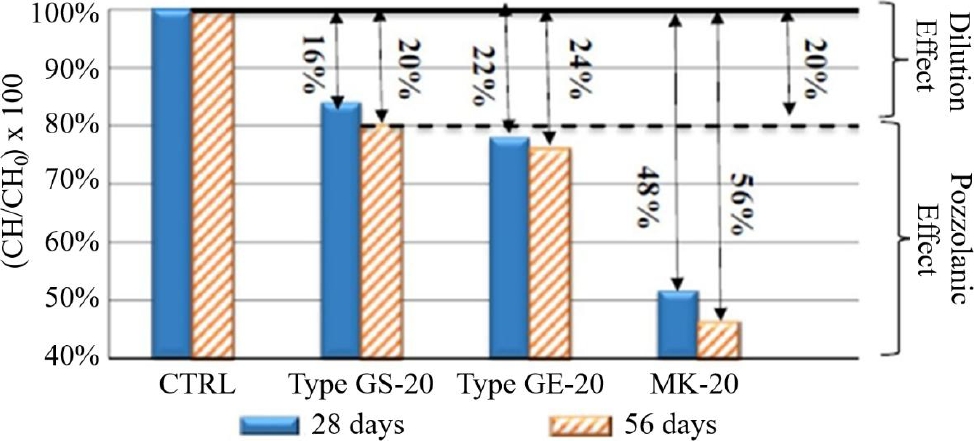
Figure 6. Normalized Calcium Hydroxide Content of Paste Samples Containing 20% Cement Replacement Level of Type GS, Type GE and MK Pozzolans (Chakraborty et al., 2010).
5.4 Effectiveness of GGPs in Mitigating Alkali-Silica Reaction
The potential for alkali-silica reaction in concrete is often mitigated by using pozzolans in sufficient dosage level, depending on the degree of reactivity of the aggregate. In this regard, the effectiveness of pozzolans is not only based on their ability to react with calcium hydroxide through pozzolanic reaction to produce C-S-H or C-A-S-H gel and tie up the alkalis present in the pore solution, but also is dependent on the ability of pozzolans to refine the pore structure in concrete to minimize moisture migration into concrete. These mechanisms that help suppress alkali-silica reaction are therefore a function of both the chemical composition of the pozzolans and the physical properties such as its fineness. Furthermore, the ASR mitigation effectiveness of certain alkali-bearing pozzolans will also depend on whether the alkalis from the pozzolan become available in the pore solution and augment the alkali- loading within the concrete. With regards to GGPs, the presence of alkalis in Type GS should not be of concern when there are no reactive aggregates present in the concrete. However, the use of Type GS GGP could be of concern when a reactive aggregate is present in the concrete matrix. Figure 7 shows the length-change results from miniature concrete prism test (MCPT) based on AASHTO T380 (Dezfouli, 2017). In these tests, a highly reactive siliceous argillite aggregate was used in concrete mixtures with binder consisting of binary blends of Portland cement with Type GS, Type GE and metakaolin (MK). In these tests, Type GS and Type GE pozzolans were used at 10%, 20% and 30% mass replacement levels of Portland cement, while MK was used only at 10% replacement level. Mixtures with higher replacement levels of MK were not acceptable regarding workability and therefore were not used. In this test, the aggregate was considered reactive if the expansion level exceeded 0.04% at 56 days, and the pozzolan was considered effective in mitigation ASR if the expansion level was maintained below 0.02% at 56 days. These two threshold levels are indicated by dashed lines identified by *, and ** in the legend of Figure 7.
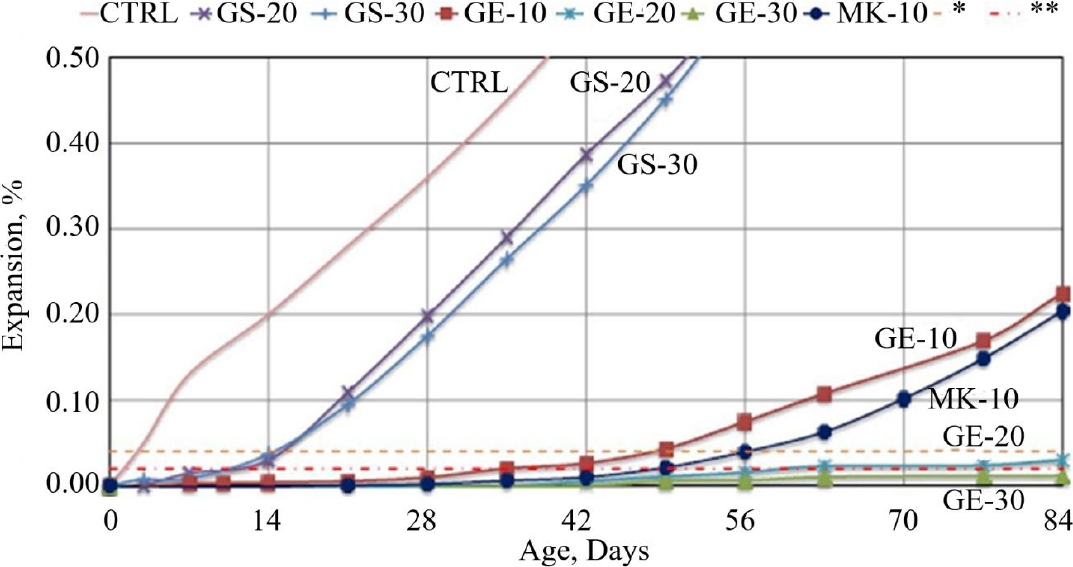
Figure 7. Expansion behavior of concrete prisms in AASHTO T380 test (Dezfouli, 2017). *Expansion Limit (0.04%) for CTRL at 56 Days, **Expansion Limit (0.02%) for SCM Containing Samples on 56 Days.
Results from these studies showed that the CTRL specimen exhibited very high level of expansion even before 56 days and was clearly indicative of the presence of a highly reactive aggregate. However, when Type GS pozzolan was used at 20% and 30% cement replacement level, it was found to be ineffective in mitigating expansion at both dosage levels. However, when Type GE pozzolan was used, the expansion behavior of concrete was substantially lowered at all dosage levels, although the 10% dosage level was found to be insufficient to mitigate the expansion below the threshold limit of 0.02% at 56 days. Type GE pozzolan at 20% and 30% dosage level was found to be effective in mitigating expansion below the threshold limit at 56 days. While MK was able to substantially lower the expansion in concrete prisms at 10% dosage level, this dosage level was inadequate for mitigating the ASR expansion below the threshold limit of 0.02% at 56 days. Clearly, from this study, it is apparent that Type GS pozzolan was unable to mitigate ASR expansion even at 30% dosage level, and the alkali content within the glass is likely contributing to the alkali-loading in concrete. Tagnit-Hamou reported that ASR mitigation performance of Type GS pozzolan can be significantly improved in ternary blends with silica fume, metakaolin and slag as observed in Figure 8 (Kaminsky et al., 2020). In a different study by Amer et al., it is shown that the use of Type GE pozzolan in moderate amounts can significantly improve the performance of Class C fly ash (CFA) in mitigating ASR as seen in Figure 9 (Amer et al., 2022).
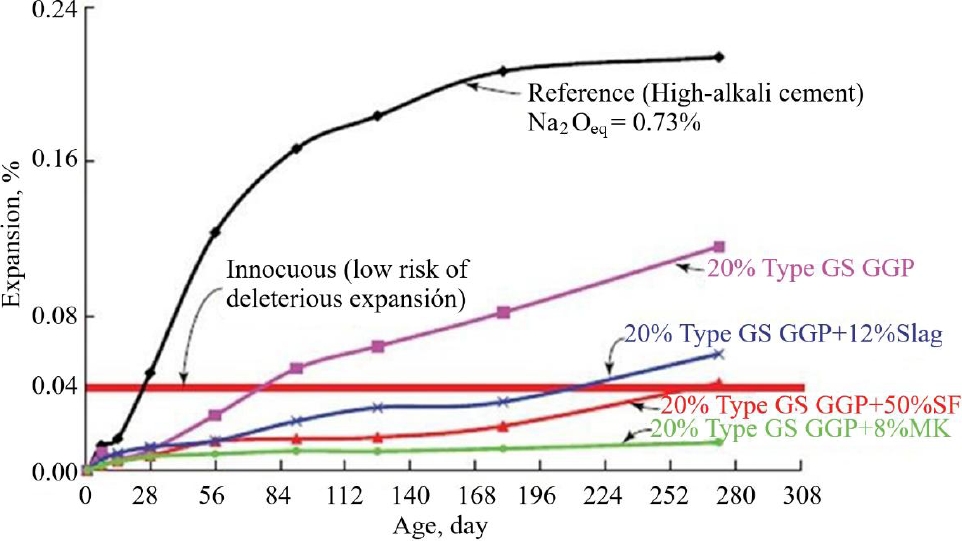
Figure 8. Length change behavior of concrete prisms containing Spratt limestone aggregate in binary and ternary blends of Type GS pozzolan with slag, silica fume and metakaolin (Courtesy of Arezki Tagnit-Hamou, University of Sherbrooke) (Kaminsky et al., 2020).
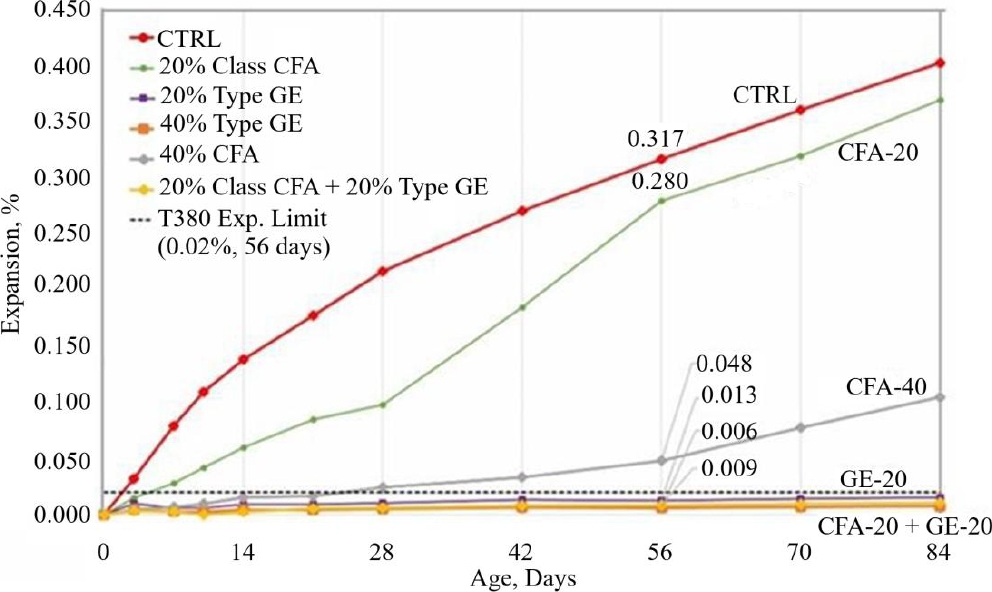
Figure 9. Length change behavior of concrete prisms in AASHTO T380 test, containing binary blends of Type GE pozzolan and Class C fly ash (CFA) with a highly reactive siliceous argillite aggregate (Amer et al., 2022).
5.5 Effectiveness of GGPs in Minimizing Chloride Permeability
Minimizing chloride permeability of concrete is essential in improving durability of reinforced concrete against reinforcement corrosion. In this regard, the effectiveness of GGPs in reducing chloride permeability was investigated in several studies (Dezfouli, 2017; Amer et al., 2022; Krstic and Davalis, 2018). Figures 10 and 11 show the results from Rapid Chloride Ion Permeability tests per ASTM C1202 across three mixtures containing 20% pozzolan dosage level. The performance of Type GS pozzolan is comparable to that of Class F fly ash at later ages (28 days and 56 days), while the performance of Type GE is superior to other pozzolans evaluated in this study [Rashidian]. In another study, the influence of different dosage levels of Type GE pozzolan was evaluated and compared to a Control mixture and another mixture with 20% Class F fly ash as shown in Figure 11. These results clearly indicate the superior performance of GGPs in controlling chloride permeability in concrete.
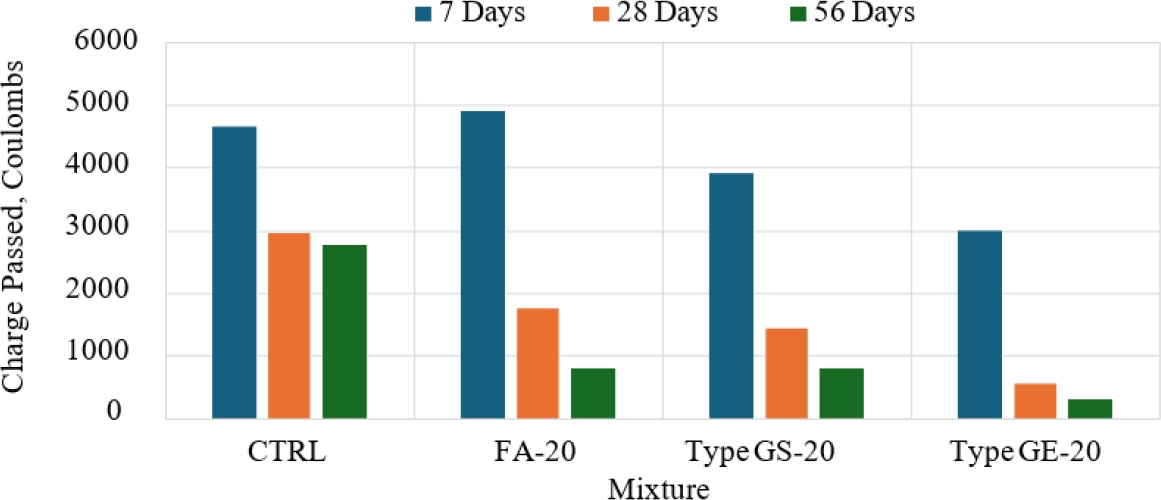
Figure 10. Influence of Pozzolan Type on RCPT Results. Coulomb values less than 1000 are considered to be very low permeability (Dezfouli, 2017; Amer et al., 2022).
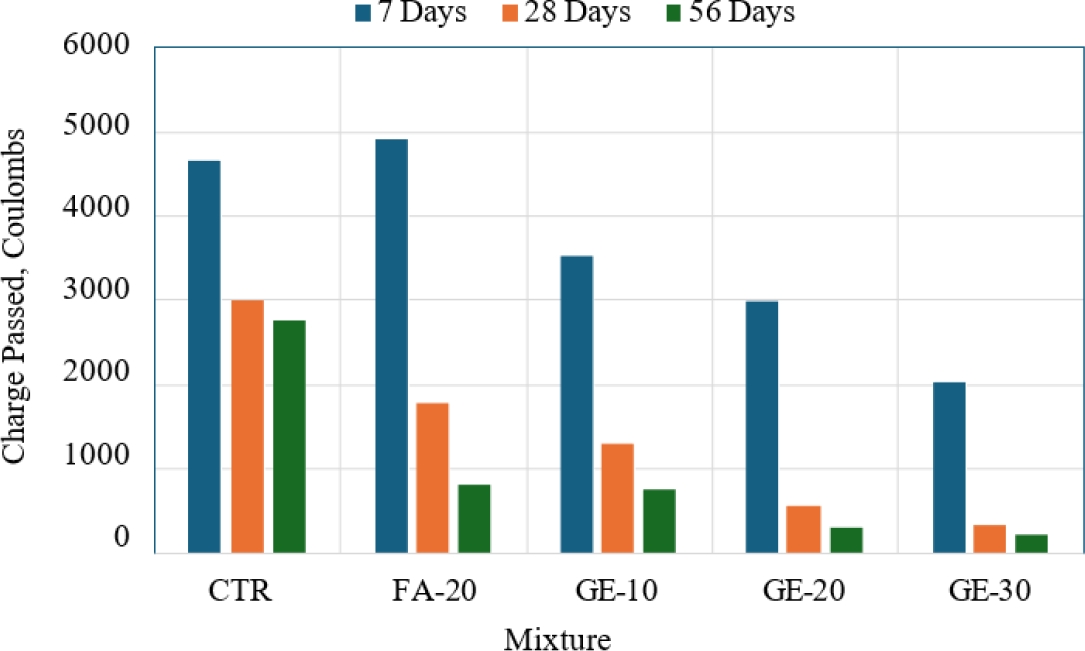
Figure 11. Influence of Type GE pozzolan on RCPT Results. Coulomb values less than 1000 are considered to be of very low permeability (Dezfouli, 2017).
6. CONCLUSIONS
Silica-based glass is a universally produced material with a wide-variety of applications in modern civilization. While millions of tons of this material are produced and a fraction of it recycled each year, a vast majority of glass is collected as waste and disposed in landfills in the United States. Given that glass is a material of consistent chemical composition with almost entirely made of amorphous silica structure, it is extremely suitable as a supplementary cementitious material for use as a supplementary cementitious material in Portland cement concrete. Furthermore, one can consider glass as a lower- carbon material in every sense compared to Portland cement. In its initial production state, i.e. virgin state, while 0.66 tons of CO2 are produced for every one ton of glass manufactured, to produce a finely ground Type GS or Type GE pozzolan, it only takes 0.056 tons of CO2e per one ton of ground glass pozzolan (Nassar and Soroushian, 2011). This is significantly less than the carbon footprint of cement at 0.922 tons of CO2 per ton of Portland cement produced. Both Type GS and Type GE ground glass pozzolans have been shown to be effective pozzolans that not only improve mechanical properties, but also durability issues in concrete. Of course, where potential for alkali-silica reaction exists, the use of Type GS ground glass pozzolan should be considered in ternary blends with other pozzolans such as slag, silica fume, Class F fly ash or metakaolin. Furthermore, the use of glass pozzolans helps improve the workability of concrete mixture in the fresh state and can reduce the need for water-reducers for improving workability.
Given all these positive attributes of ground glass pozzolans, the use of Type GS and GE GGPs can serve as one of the many strategies needed to reduce the carbon footprint in modern concrete formulations. Furthermore, using waste glass as a pozzolan in concrete greatly minimizes the need to landfill the waste glass, thus proving to be also environmentally beneficial solution. With the advent of ASTM C1866 standard for ground glass pozzolans, the future for the use of ground glass pozzolans in concrete is bright and is rationalized by strong specification that ensures superior performance of concrete while achieving this through a low-carbon and environmentally sustainable approach.
7. ACKNOWLEDGEMENTS
The author wishes to thank his former students Dr. Hassan Rashidian Dezfouli, Dr. Kaveh Afshinnia, Dr. Omar Amer as well as the ASTM C09.24 committee members in working together and developing the ASTM C1866 standard for ground glass pozzolans.
8. REFERENCES
Ellis, D. A., Badel, A. F., Chiang, M. L., Park, R. J. Y., Chiang, Y. .M (2019), Toward Electrochemical Synthesis of Cement – An Electrolyzer-Based Process for Decarbonating CaCO3 while Producing Useful Gas Streams, Proceedings of the National Academy of Sciences of the United States of America, Vol. 117 (23) 12584-12591, https://doi.org/10.1073/pnas.1821673116
CarbonCloud (2024), https://apps.carboncloud.com/climatehub/product-reports/id/41919745467; Accessed on October 31, 2024
United States Environmental Protection Agency (2024), Report on Facts and Figures about Materials, Waste and Recycling, Glass: Material-Specific Data, Accessed on October 16, https://www.epa.gov/facts-and-figures-about-materials-waste-and-recycling/glass-material-specific-data#GlassOverview
Glass Recycling (2024), How is Glass Recycled? Compactor Management Company, Website Accessed on October 1, How to Recycle Glass? | Compactor Management Company (https://norcalcompactors.net)
Nassar, R. -U. -D., and Soroushian, P. (2011), “Field investigation of concrete incorporating milled waste glass,” Journal of Solid Waste Technology and Management, V. 37, No. 4, pp. 307-319. https://doi.org/10.5276/JSWTM.2011.307
Kaminsky, A., Krstic, M., Rangaraju, P. R., Tagnit-Hamou, A., Thomas, M. D. A. (2020), Ground- Glass Pozzolan for Use in Concrete, Concrete International, Vol. 42, No. 11, pp. 24-32.
Chakraborty, R., Dey, A., Mukhopadhyay, A. K. (2010), Loading Rate Effect on Nanohardness of Soda-Lime-Silica Glass, Metallurgical and Materials Transactions A., Vol. 41, pp:1301-1312. https://doi.org/10.1007/s11661-010-0176-8
Dezfouli, H. R. (2017), Characterization and Evaluation of Ground Glass Fiber as a Cementitious Component in Portland Cement and Geopolymer Concrete Mixtures, [PhD Dissertation, Clemson University], Retrieved from https://open.clemson.edu/all_dissertations/1994.
Smith, Y. R., Nagel, J. R., Rajamani, J. R. (2019), Eddy current separation for recovery of non-ferrous metallic particles: A comprehensive review, Minerals Engineering, Vol. 133, pp. 149-159. https://doi.org/10.1016/j.mineng.2018.12.025
Tagnit-Hamou, A., Bengougam, A. (2012), “The Use of Glass Powder as Supplementary Cementitious Material,” Concrete International, Vol. 34, No. 3, pp. 56-61.
Nassar, R. -U. -D., Soroushian, P. (2012), “Strength and durability of recycled aggregate concrete containing milled glass as partial replacement for cement” Construction and Building Materials, V. 29, pp. 368-377. https://doi.org/10.1016/j.conbuildmat.2011.10.061
Shayan, A., Xu, A. (2006), “Performance of glass powder as a pozzolanic material in concrete: A field trial on concrete slabs,” Cement and Concrete Research, V. 36, No. 3, pp. 457-468. https://doi.org/10.1016/j.cemconres.2005.12.012
Soliman, N. A., Omran, A. F., Tagnit-Hamou, A. (2016), “Laboratory Characterization and Field Application of Novel Ultra-High-Performance Glass Concrete,” ACI Materials Journal, V. 113, No. 3, pp. 307-316. https://doi.org/10.14359/51688827
Schwarz, N., Cam, H., Neithalath, N. (2008), “Influence of a fine glass powder on the durability characteristics of concrete and its comparison to fly ash,” Cement and Concrete Composites, V. 30, No. 6, pp. 486-496. https://doi.org/10.1016/j.cemconcomp.2008.02.001
Afshinnia, K., Rangaraju, P. R. (2015), Influence of fineness of ground recycled glass on mitigation of alkali–silica reaction in mortars, Journal of Construction and Building Materials, Vol. 81, pp. 257-267. https://doi.org/10.1016/j.conbuildmat.2015.02.041
Afshinnia, K., Rangaraju, P. R. (2016), “Sustainable Use of Recycled Glass in Portland Cement Concrete”, The Journal of Solid Waste Technology and Management, Volume 42, issue 1, pp. 16-24. https://doi.org/10.5276/JSWTM.2016.16
Krstic, M., Davalos, J. F. (2019), “Field Application of Recycled Glass Pozzolan for Concrete,” ACI Materials Journal, V. 116, No. 4, pp. 123-131. https://doi.org/10.14359/51716716
ASTM International (2020), ASTM C1866/C1866M-20: Standard Specification for Ground Glass Pozzolan for Use in Concrete, West Conshohocken, PA. https://doi.org/10.1520/C1866_C1866M-20
Afshinnia, K., Rangaraju, P. R. (2015), “Efficiency of Ternary Blends Containing Fine Glass Powder in Mitigating Alkali-Silica Reaction”, Journal of Construction and Building Materials, Vol. 100, pp. 234-245. https://doi.org/10.1016/j.conbuildmat.2015.09.043
Amer, O. A., Rangaraju, P. R., Dezfouli, H. R. (2022), Effectiveness of binary and ternary blended cements of class C fly ash and ground glass fibers in improving the durability of concrete. Journal of Sustainable Cement-Based Materials, Vol. 11, No. 2, pp. 127-136. https://doi.org/10.1080/21650373.2021.189908
Torres-Carrasco, M., Tognonvi, M. T., Tagnit-Hamou, A., Puertas, F. (2015), Durability of Alkali- Activated Slag Concrete Prepared Using Waste Glass as Alternative Activator, ACI Materials Journal, V. 112, No. 6, pp. 791-800. https://doi.org/10.14359/51687903
Cyr, M., Idir, R., Poinot, T. (2012), Properties of Inorganic Polymer (Geopolymer) Mortars Made of Glass Cullet, Journal of Material Science, Vol. 47, No. 6, pp. 2782-2797. https://doi.org/10.1007/s10853-011-6107-2
Krstic, M., Davalis, J. F. (2018), Macro- and Micro-Structure Evaluations of Recycled Post-Consumer Glass Cementitious Material for Concrete, Proceedings of SynerCrete’ 18: International Conference on Interdisciplinary Approaches for Cement-Based Materials and Structural Concrete, Funchal, Madeira Island, Portugal, Oct 2018, pp. 261-266.
Nature Editorial (2021), Glass is the hidden gem in a carbon-neutral future, Nature, 599, pp. 7-8. https://doi.org/10.1038/d41586-021-02992-8
