
| Review | https://doi.org/10.21041/ra.v15i2.809 |
Delithiated β-Spodumene of lithium mineral extracting process, a potential supplementary cementitious material for geopolymer & conventional concrete applications with reduced CO2 footprint
Processo de extração de lítio, β-espodumeno. Potencial de material cimentício suplementar para aplicações em geopolímero ou em concreto convencional com pegada de CO2 reduzida
1 Curtin University WA & MRWA, Australia.
*Contact author: didar.cheema@mrwa.wa.gov.au
Received: 24/11/2024
Revised: 10/04/2025
Accepted: 24/04/2025
Published: 01/05/2025
| Cite as: Cheema, D. S. (2025), “Delithiated β-Spodumene of lithium mineral extracting process, a potential supplementary cementitious material for geopolymer & conventional concrete applications with reduced CO2 footprint.”, Revista ALCONPAT, 15 (2), pp. 108 – 122, DOI: https://doi.org/10.21041/ra.v15i2.809 |
Abstract
The aim of this study was to evaluate how capping placement affects the uniaxial compressive behavior of hollow concrete blocks. Two placement methods were analyzed: 1) on the gross area and 2) on the lateral faces. An experimental program and statistical analysis were conducted to identify significant differences between the methods. The results showed that blocks capped on the lateral faces exhibited a 12.5% decrease in load capacity and an 11.33% decrease in stiffness compared to those capped on the gross area. This study focuses on hollow concrete blocks and concludes that using a variable denominator leads to a misinterpretation of their strength.
Keywords: masonry; hollow concrete blocks; mortar placement.
1. BACKGROUND
The use of binders in the construction sector are in use for a millennium but the most common one in use is the Calcium-Silicate-Hydrate (C-S-H) hydraulic binder with its origin in the beginning of the 19th century. Over 200 years period, that is up to the end of 20th century, its build-up demand was around 1.2 billion tons per year and over the last 30-35 years its steep consumption trend as OPC concrete, made it as the second most consumed product on the planet after water (Mohammed, et al. 2013). With the ever-increasing demand for Ordinary Portland Cement (OPC) as a prominent binder in the construction sector, the main concern is the significant amount of greenhouse gas (GHG) emission due to the burning limestone and clay together at around 1450 oC. The production process of OPC involved 40% CO2 emission from the burning of fossil fuel and 50% due to the manufacturing process of clinker and its milling, while remaining 10% emissions is from the transportation of finished product and front-end production processes (Hendriks, et al. 1999; Mohammed, et al. 2013; WBCSD, 2012). Below are the primary constituents of a modern Portland cement finished clinker (Mohammed, et al. 2013).
| Tricalcium Silicate | - | 50% CA3SIO5 OR 3CAO_SIO2 |
| Dicalcium Silicate | - | 25% CA2SIO4 OR 2CAO_SIO2 |
| Tricalcium Aluminate | - | 10% CA3AL2O6 OR 3CAO_AL2O3 |
| Tetracalcium Aluminoferrite | - | 10% CA4AL2FE2O10 OR CAO_AL2O3_FE2O3 |
| Gypsum | - | 5% CASO4_2H2O |
This further depends upon the availability of needy materials reserves and varies from nation to nation as per AS 3972 compared to UK and Europe applicable standards BS EN 197 (BSI, 2011), type of cements produced in combination with partial replacement of OPC with SCM are summarized in Table 1 below.
| CLASSIFICATION OF COMMON CEMENT TYPES ACCORDING TO AS 3972 | CLASSIFICATION OF COMMON CEMENT TYPES ACCORDING TO BS EN 197-1:2011*. |
| General Purpose Portland Cement (GP) and may contain up to 5% approved minerals addition as per AS 3582, which may be limestone containing not less than 80% by weight of CaCO3. | CEM I Portland cement and up to 5% of minor additional constituents (the original OPC) |
| General Purpose Blended Cement (GB)-35% GGBS addition as per AS 3582 (GGBS) and 65% GP from the cement producer. | CEM II Portland composite cement with up to 35% of other Supplementary Cementitious Material (SCM) such ground limestone, fly ash or Ground Granulated Blast furnace Slag (GGBS) |
| Low Heat Cement (LH) with 35% GP and 65% GGBS as per AS 3582. | CEM III blast furnace cement Portland cement with a higher percentage of blast furnace slag, usually around 60% to 75% |
| GP with varying proportion of pozzolanic SCM as per AS3582 by concrete producers as a composite GP cement- blend, which can be with GGBS or fly ash, GGBS & Fly ash or selected pozzolanic material. This type of GB-binder may be the exception to AS3972. | CEM IV pozzolanic cement Portland cement with up to 55% of selected pozzolanic constituents |
| CEM V composite Portland cement blended with GGBS or fly ash and pozzolanic material |
*Mohammed S Imbabi et al, 2013.
The review on OPC production has indicated its consumption around 3.6 billion tons/year globally by 2010, as seen in Figure 1a). This was almost 3 times what was at the end of 20th century (Mohammed, et al. 2013; WBCSD, 2012).
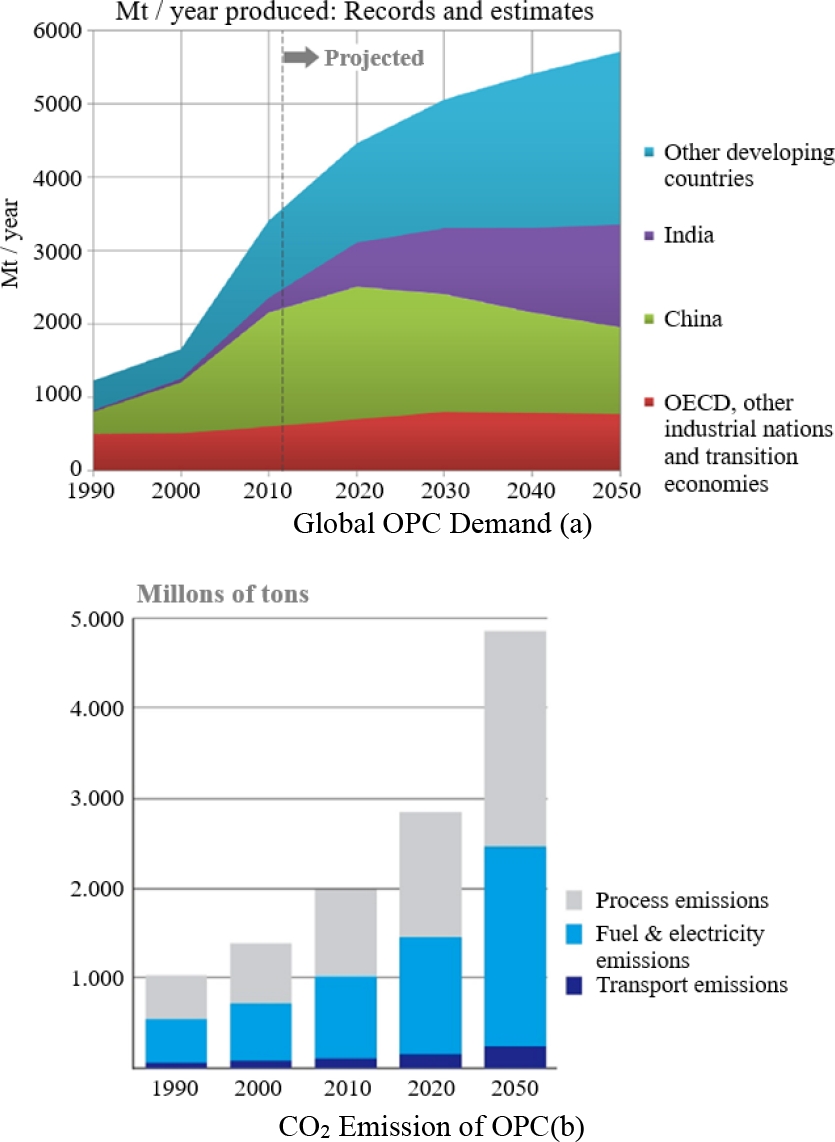
Figure 1. Global OPC demand (a) and CO2 emission of OPC (b)
By 2050, prediction of OPC demand is expected to be around 6 billion tons globally with a projected CO2 emissions approximately 5 times of 1990 level from the cement industry if no changes are made to current production methods as per indication of Fig 1(b). This will be with the growing urbanization trend in developing countries such as China & India particularly. With the present estimated worldwide use of concrete, which is in the order of 15 billion tons/annum equates to demand of ordinary Portland cement (OPC) 4 billion tons/year (Garside, 2021), and is responsible for 8% of global CO2 emissions (Andrew, 2019). The concrete manufacturers, who make use of lion- share of OPC, are the fourth largest contributors to man–made global carbon emission trailing behind oil, coal, and natural gas.
2. INTRODUCTION
Common by- products that can be used for partial replacement of cement in conventional concrete as SCMs and as a binder for alkali activated concrete (geopolymer concrete) to lower the CO2 outcomes are mainly the fly ash from coal fired power plants, Ground Granulated Blast Furnace Slag (GGBFS) from iron and steel making processes and metakaolin clay from kaolin clay. However, developed countries are reverting to greener energy means in transport sector by choosing alternative power generation sources relative to coal fired power to reduce dependency on fossil fuel in transport sector and to cut down the greenhouse gas (GHG) emissions, which constitutes about 27% global CO2 emissions. These potential shifts in the energy sector may mean phasing out of power generation system in future that may be prominent in CO2 emissions, such as coal fired power plant. This may transpire into the potential gap in supply-chain of fly ash- SCM in some countries despite the fact that circular economy principles of fly ash- SCM is well established over the past 50 odd years. Recent works underline that 100% replacement of OPC with fly ash in alkali activated geopolymer concrete is feasible. However, the reliance on coal-based power plants developing countries may continue for some time in future for their energy demand, which underpins the current coal consumption, which is still the largest one compared to other energy production means, that is, more than 8 billion tons every year (Coal, Worldometer, 2024).
With alternative energy sources, that is, using rechargeable batteries that store energy in the form of chemicals and convert it into electrical energy on demand is seen as the greener alternative for the transport sector and for the storage of renewable energy. The key ingredient in these batteries is Lithium. In resourcing this Lithium from mineral, the USA, Australia, China & South African countries (Congo, Zimbabwe) are with its sizeable sources relative to other parts of the world as shown in Figure 2 below (Oderji, et al. 2019).
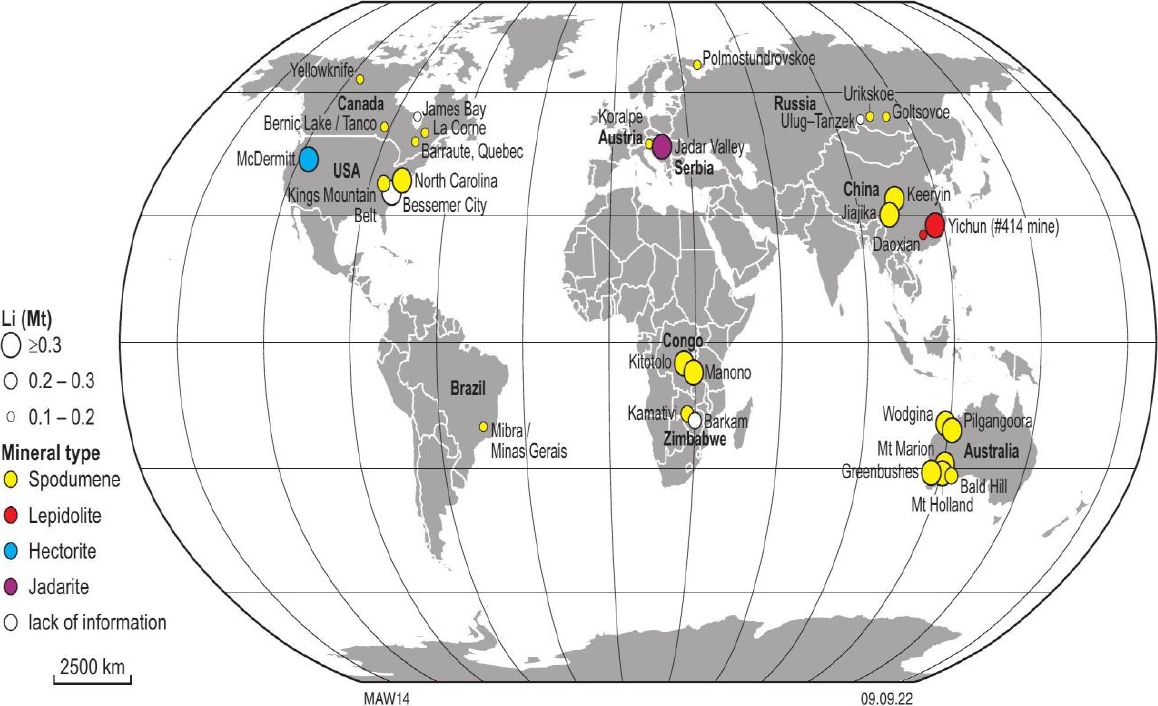
Figure 2. Global Mineral Resources for Lithium Source: MRIWA Report M532. After Li et al (2019).
Lithium is processed from natural α-Spodumene to β-Spodumene for these rechargeable batteries and the de-lithiated β-Spodumene” (DBS) in its leached form, also known as Lithium Slag (LS) as by-product, comprises of quartz (SiO2) and aluminium oxide (Al2O3) similar to fly ash SCM. The most common extraction process is by concentrated sulphuric acid digestion and is briefly touched on in sub-head 2.1 below. With this in mind, the feasibility of De-lithiated β-Spodumene (DBS) use, in combination with conventional SCMs - slag (GGBFS) like low calcium fly ash by-product, for non- structural sustainable geopolymer concrete applications, is discussed.
2.1 H2SO4 extraction process from Lithium Mineral
The most common extraction process of lithium is with the digestion process using concentrated sulfuric acid and hence its leached form, that is, lithium slag is with sulphite residues. Since lithium is found in a very low concentration in igneous rocks, its most common extraction processes generally employ a calcination at 1100 ◦C to transform α-spodumene into a more reactive β phase. In reducing these raw minerals to spodumene (Li2O, Al2O3. 4SiO2) with Li2O content up to 8% approximately, this is a large energy consumption activity followed by acid digestion process using concentrated sulfuric acid at 250 ◦C (Salakjani, et al. 2020; Zenghu, et al. 2008). This process has been reported as one of the most efficient methods for lithium extraction in the literature. Figure 3 below indicates the various process steps involved with the lithium extraction from lithium mineral with final product as a Lithium Carbonate (Li2CO3) and its by-product as lithium slag.
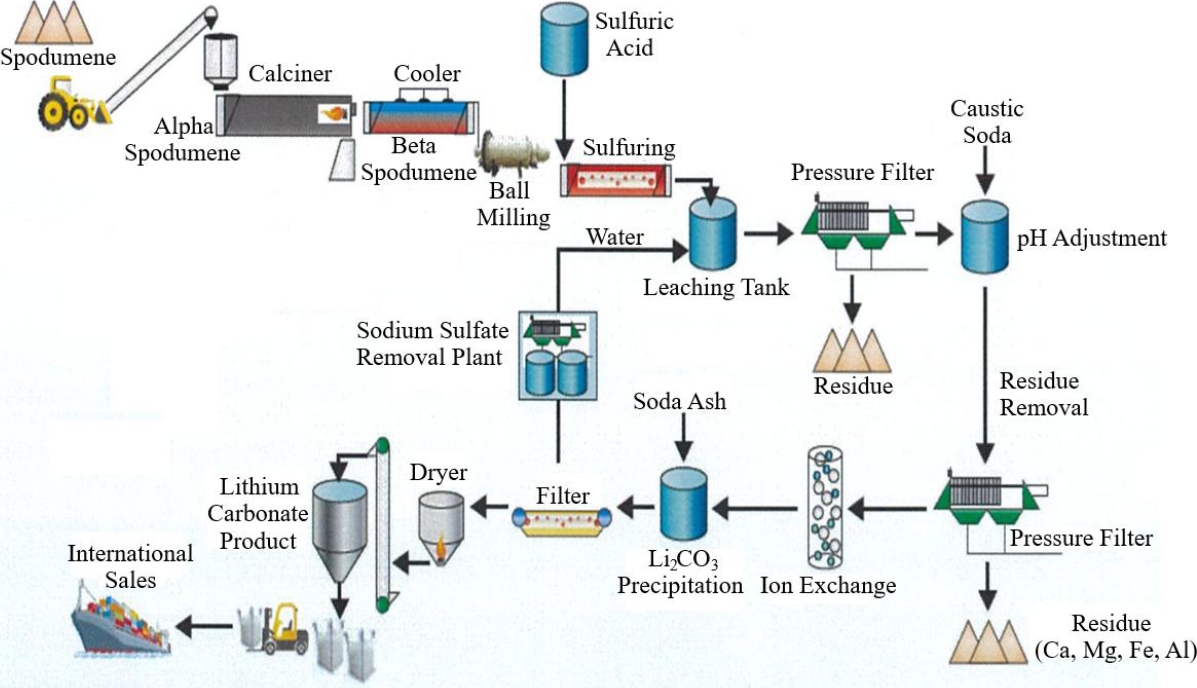
Figure 3. Lithium Extraction Process from α-Spodumene Minerals, Source: https://www.galaxyresources.com.au/project_Jiangsu.shtml
However, because of the lithium extraction process using concentrated H2SO4, lithium slag so produced as a by-product, typically may have high SO3 content. As such, the reaction with calcium may tend to produce more gypsum, that may be prone to extending its both initial and final setting.
On this account its partial replacement in OPC concrete can be limited to an extent because of the limitation of optimum gypsum content of OPC concrete. However further research may refine all these probabilities.
Similarly, its extraction using a chlorination process from β-Spodumene may lead to the presence of chlorides exceeding the threshold limit which should stay below 0.06% by wt. of the concrete either in conventional or GPC. The corrosion potential of the embedded steel when used with lithium slag extracted by means of chlorination needs further research.
However, with the limited literature available on lithium slag relative to fly ash, its amorphous alumino-silicate composition can render it potential supplementary cementitious material on similar basis like fly ash and slag etc (Lu, et. al. 2019; Tan, et al. 2015). Because of potential similarities of DBS with fly ash SCM and its pozzolanic activities, it can be future alternative- SCM for blended- cement production, the precursor for geopolymer concrete and stabilizing agent for a weak soil as replacement of conventional stabilization cement.
So, DBS can be a potential alternative SCM, that may substitute the gap that might result from the reduced activity of coal fired power plants in some parts of the world in view of future innovative greener- energy initiatives with reduced carbon footprint.
3. ALKALI ACTIVATED GEOPOLYMER CONCRETE PRECURSOR AS BLENDED OR UNBLENDED SCM
By-product SCMs, such as, fly ash, slag (Ground Granulated Blast Furnace Slag-GGBS) and silica fumes (SF) are in use with OPC cement as per AS 3972 in Australia to come up with blended cement (GB). For example, Low Heat Cement (LH Cement) is the type of cement that cement producers produce with 35% General Purpose Cement (GP) and 65% GGBS, while other blended-cement-mix may be either with cement producers or with concrete producers with varying proportion of SCMs as per AS 3582, where partial replacement of GP by SCMs is affected to cut down its environmental impacts associated with GHG emission.
Over the past decade, the demand of lithium-ion batteries (LIBs) has increased by almost eight-fold to meet consumers’ electronics and electric-driven vehicles (EDV). It was recognized that Transportation activities, mostly associated with passenger cars, have been responsible for about a quarter of greenhouse gas (GHG) emissions in the USA (EPA 2016,US GHG Emissions and Sinks).
It is anticipated that a high-level adoption of EDVs by 2050 will be the future trend in the transportation sector to alleviate its negative impacts on climate change. This could lead to a reduction of CO2 emission by 70% and is seen as the most tangible measure from a global warming perspective over the coming years (Scown, et al. 2013). Renewable energy (Solar) storage and its use on demand is reliant on batteries, as well. Also, for alkali activated geopolymer, alumino-silicate SCMs’ (FA, GGBS & MK) are the ones that predominantly can be for one-part or two-part mixing of geopolymer binders used in concrete applications (Luukkonen, et al. 2018; Oderji, et al. 2019).
Lithium Silicate from β - Spodumene is becoming the most exploited mineral for battery grade Lithium, which generate 10-ton DBS as by-product for every ton of lithium extraction as Lithium Carbonate (He, et al. 2018). Like fly ash disposal, its ineffective disposal could impact both land and ground water negatively through leached SO4 & F.
β-Spodumene with its chemical composition as Li2O, Al2O3. 4SiO2 before processing has a theoretical content of Li2O around 8.0% approximately and after leaching, the by-product of lithium mineral extraction processes also referred as “Leached Spodumene Material” or “Delithiated Beta Spodumene”, comprises predominantly of quartz (SiO2) and aluminium oxide (Al2O3), which is of pozzolanic nature similar to fly ash SCM having composition of SiO2 & Al2O3 by weight greater than 80% (Liu, et al, 2019a).
Lithium extraction processes (which can be as Li2CO3 or LiOH or in other molecular form) have a significant bearing on the composition of lithium slag and so on its alkali activation as a geopolymer binder for concrete applications. Past studies have shown that 10-30% cement replacement by fly ash resulted in improving the compressive strength of conventional concrete (Marthong and Agrawal, 2012; Mohamed, 2011; Wankhede and Fulari, 2014).
Table 2 below summarizes the DBS’ elemental composition compared to Fly Ash, GGBS & SF composition. Its similar alumino-silicate composition to the fly ash SCM underpins its potential use (Bob, et al. 2017).
Table 2. SCM’s Elemental Composition
| Compound | SSMs | Anhydrous Alkali Activator | Typical GP Cement | Standard Sand | |||
| Fly Ash (Collie, WA) | GGBS | SF | Leached β-SPODUMENE (DBS) | Sodium Meta-Silicate Penta Hydrate | |||
| SiO2 | 53 | 32.4 | 93.67 | 57.22 | 46.21 | 17-25 | 98.4 |
| Al2O3 | 26 | 13 | 0.83 | 21.28 | - | 3-8 | 0.41 |
| Fe2O3 | 1.1 | 0.65 | 1.3 | 0.87 | - | 0.5-6 | 0.36 |
| CaO | 1.5 | 41.9 | 0.31 | 8.41 | - | 60-70 | 0.16 |
| *Na2O | 0.4 | 0.15 | 0.4 | 0.28 | 50.78 | 0.5-1.3 | 0.01 |
| *K2O | 0.8 | 0.35 | 1.63 | ||||
| TiO2 | 0.15 | ||||||
| MgO | 5.5 | 0.15 | 0.1-4.5 | ||||
| P2O5 | 0.11 | ||||||
| Total Soluble SO3 | 0.2 | 2.2 | 2.9 | 2.4 | |||
| ZrO2 | |||||||
| Cr | |||||||
| MnO | |||||||
| *LOI | 0.9 | 5.83 | 1.1 | ||||
| SG (g/cc) | 2.33 | 2.89 | 2.22 | 3.14 | 2.64 | ||
| Embodied CO2 | 0 | 0.190 | 0.2* | 1.86# | |||
* He et al,2018, # Ma et al, 2018
Further with the development of geopolymer binders, which derive their cementing action on an activation by alkaline material, which could be in hydrous or anhydrous form. That is when aluminosilicate materials, such as fly ash and slag, react with an alkali source material, it produces a material that has binding properties (Glukhovsky, et al. 1957; Davidovits, 1984) and are known by geopolymers or alkali-activated materials (AAMs). Compared with OPC, AAMs are more environmentally friendly because they emit much lower amounts of CO2 to the atmosphere (Van Deventer, et al. 2010; Duxson, et al. 2007).
The AAMs have other advantages, such as, they have better resistance to fire, acid attack, and alkali-silica reaction (Davidovits, 1991; Rashidian-Dezfouli and Rangaraju, 2021; Kupwade-Patil and Allouche, 2013) in addition to high early strength gain, superior mechanical properties (Fernández-Jiménez, et al. 1999; Hardjito, et al. 2004) when used as binder in the concrete and has the ability to replace OPC up to 100% to be significant environmentally friendly. Past study- findings by the author have shown that one-part geopolymer mixing technique is congenial for field application. This however require blended precursor with slag percentage, which can vary from 30-40% slag, activated with solid activator - sodium metasilicate pentahydrate (Na2SiO3.5H2O).
With this application of one-part geopolymer mixing showed the promising compressive strength results for dual use path in the field environment on road- network (Cheema, 2012) as shown in Figure 4 below.
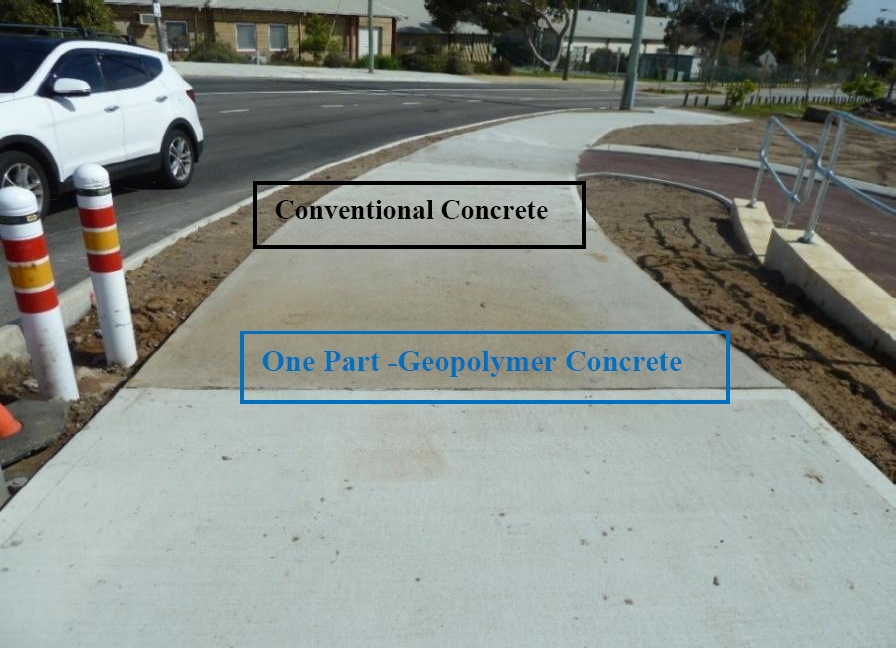
Figure 4. Dual Use Concrete Foot Path
The compressive strength trend was noted on gradual increase up to 90 days compared to its conventional OPC concrete counter- part as indicated in Figure 5 (a) below.
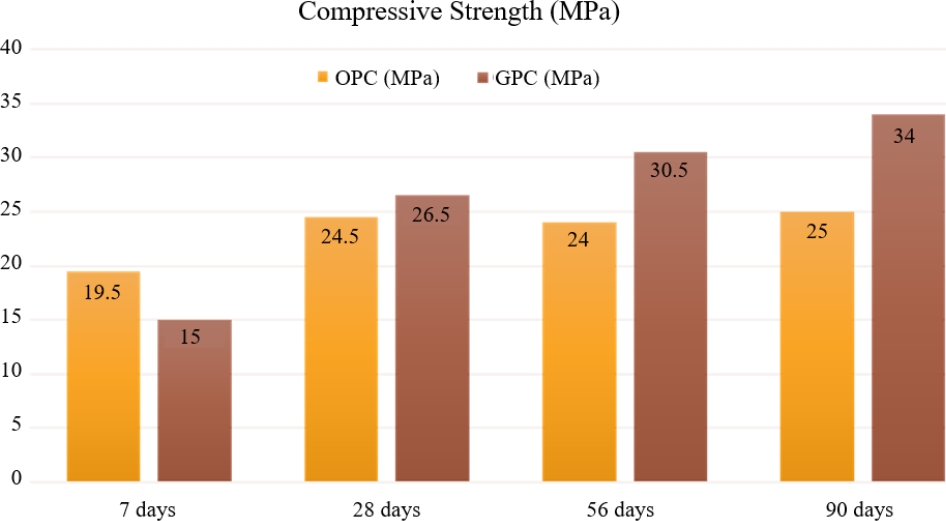
Figure 5(a). Compressive strength of GPC trend with Fly Ash & 30% Slag
On similar basis, depending upon the nature of extraction process of Lithium from mineral as a Lithium carbonate or hydroxide, its sulphite residue has bearing on its binding.
Preliminary investigation elsewhere has shown promising results as a potential alternative to conventional concrete when Lithium slag is used in combination of slag in one part mixing of geopolymer binder for concrete similar to fly ash and slag combination. Figure 5 (b) below indicates the compressive strength trend of lithium slag with various slag combinations with mixes as GP1(0% slag), GP2(10% slag), GP3(20% slag), GP4 (30%slag) and GP5 with 40% slag (Ali Shah, et al. 2020).
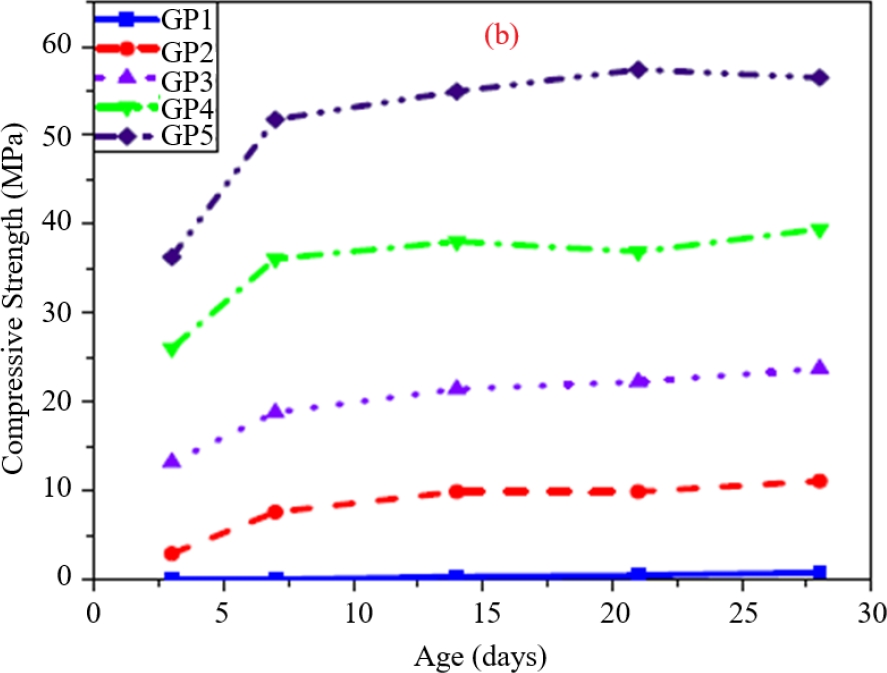
Figure 5 (b). Compressive strength of GPC trend with lithium slag with 30% slag.
4. GGBFS -SLAG BLEND EITHER WITH FLY ASH OR LITHIUM SLAG SCM AS POTENTIAL PRECURSOR FOR GEOPOLOYMER CONCRETE
Both, Fly ash or Lithium slag, when used in combination with GGBS in similar proportion approximately in one part geopolymer formulation showed improved setting time & compressive strength under ambient curing conditions. This is seen as more practical from safety aspect compared to handling of chemicals in liquid form for two-part mixing of geopolymer binder in the field environment. Fly ash- blend with GGBFS (varying from 5 to 10%), however, renders the blended precursor in two-part mixing which may have enhanced sustainable potential and is suitable as well for ambient curing. So, an adequate application of SCM in cement or concrete production can contribute significant saving in CO2 emissions, which can also form the basis of Environmental Product Declaration (EPD) for the finished product by the producer.
The EPD of prevalent and alternative SCMs depend on their location & sourcing processes, such as, with the future trend of DBS availability in WA and with its approved inclusion in AS 3582 (AS 3582-4), DBS may be seen as preferred SCM compatible with other standard SCMs for geopolymer binders and as well for partial replacement of OPC in conventional concrete.Currently the EPD of the predominant SCMs, that form the basis of their sustainability potential, depends on the following.
- Fly ash – a by-product of coal-fired power stations, fly ash is considered to carry no environmental impact as replacement of OPC for achieving decarbonizing and sustainability aspect.
- GGBS’ EPD allocation is based on its economic & environmental impacts.
- Silica fume is a by-product of silicon production and is considered to carry no environmental burden for the purposes of its EPD.
- Metakaolin (MK) environmental impacts are allocated based on calcination of kaolin clay and its EPD is dependent on its economic allocation.
- Lithium slag as an alternative SCM could be considered to carry no environmental burden for the purposes of its EPD.
Although the development of geopolymer binder & geopolymer concrete (GPC) and identification of its applications’ avenues over the past three decades approximately has advanced significantly as per its EPD ranking, but remained overshadowed largely by many constraints, such as; IP constraints, lack of its dedicated standards & test methods (hence the risks associated with products’ warranty and indemnification), lack of confidence in supply-chain of AAMs locally and lack of understanding by the industries for its adoption. This is, even though GPC-CO2 footprint is around 20% approximately per ton compared to OPC concrete because of SCMs of pozzolanic nature waste – by products usage in it with significantly less embodied CO2.
WA Tianqi Lithium Corporation (TLC) through Tianqi Lithium Energy Australia (TLEA) is investing on its downstream processing for developing clean energy operations, which has indicated that their downstream product as TAS (Tianqi de-lithiated Aluminosilicate material) has exhibited good pozzolanic activity similar to fly ash and its partial replacement up to 20% of OPC in domestic 20MPa concrete and 24% in 40MPa structural concrete is comparable to fly ash SCM. Table 3 below summarizes these findings (Munn, et al. 2017).
Table 3. SCM Partial Applications in Conventional Concrete
| Concrete Properties | 20MPa- 20% Fly ash | 20MPa- 20%TAS | 40MPa - 24% Fly ash | 40MPA- 24% TAS | |
| Compressive Strength [MPa] | 3 days | 10.0 | 10.5 | 26.5 | 27-0 |
| 7 days | 14.0 | 16.0 | 32.5 | 37.0 | |
| 28 days | 21.0 | 30.0 | 45.5 | 55.0 | |
| 90 days | 26.5 | 34.0 | 57.5 | 64.0 | |
| Drying Shrinkage [μm] | 21 days | 410 | 530 | 580 | 580 |
| 56 days | 550 | 650 | 720 | 670 | |
| 90 days | 570 | 680 | 770 | 720 | |
Lithium slag, because of its similar chemical composition as that of fly ash (that is, SiO2 and Al2O3 > 80%, by weight), can be potential alumino-silicate precursor for one-part geopolymer binder similar to blended fly ash precursor as an alternative to high energy-intensive conventional OPC concrete applications. With the limited literature available on lithium slag, yet relative to fly ash composition (Lu, et al. 2019; Tan, et al. 2015), the adequately designed geopolymer concrete mix using Lithium Slag may have the potential to reduce 80% reduction in CO2 emissions and 60% in energy consumption (Oderji, et al. 2019).
The EPD of Lithium slag by-product is like other SCMs (Fly ash & GGBFS or in their blended form) and may have the similar potential of reduced CO2 footprint. The EPD may further be subject to an independent verification system as per EN15804 with respect to transparent & comparable data over the product’s life cycle in conformance to ISO 14025.
So, in future, products’ usage based on their EPD can be seen as more tangible measures from global warming consequences and could be a more fulfilling Climate Declaration (CD), which coupled with other regulatory schemes, such as, carbon credit and so on can be seen as achieving the reduced CO2 emissions’ objectives.
Also, future initiatives in pursuing objectives of Active Carbon Neutral Certification program worldwide, would make concrete producers more & more obligated to make use of available SCMs for their products with lowest embodied CO2 holistically with EPD- backing.
5. CONCLUSION
The GPC-CO2 footprint with fly ash is around 20% per ton compared to OPC/ton for concrete. With amorphous alumino-silicate composition of Lithium slag and its pozzolanic activity similar to fly ash, DBS/LS can be a potential alternative supplementary cementitious material (SCM) for geopolymer binder or for partial replacement of OPC in conventional concrete on similar basis like fly ash and slag. Further research may refine the use of DBS as an alternative SCM on a variety of infrastructure construction applications.
6. ACKNOWLEDGMENT
The author acknowledges the support provided by Manager Mr Les Marchant Material Engineering Branch & MRWA laboratory in undertaking one-part & two-part geopolymer concrete field applications research trial study and as well investigation of some preliminary findings on DBS as a potential alternative SCM. The views expressed in this paper are those of the author and not necessarily of the organization to which the author have affiliation.
7. REFERENCE
Australian Standard (1997), AS 3972-1997, Portland and blended cements. Published by Standards Australia GPO Box 476, Sydney, NSW 2001, Australia ISBN 0-7337-0885-4.
Australian Standard (1998), AS 3582.1-1998 Supplementary cementitious materials for use with portland and blended cement, Part 1: Fly ash.
Fernández-Jiménez, A., Palomo, J. G., Puertas, F. (1999), Alkali-activated slag mortars: Mechanical strength behaviour, Cement and Concrete Research, Volume 29, Issue 8, August 1999, Pages 1313-1321. https://doi.org/10.1016/S0008-8846(99)00154-4
Bansal, R., Singh, V., Pareek, R. K. (2015), Effect on Compressive Strength with Partial Replacement of FlyAsh. International Journal on Emerging Technologies 6(1): 1-6. ISSN No. (Print): 0975-8364, ISSN No. (Online): 2249-3255
Battelle (2002). Toward a sustainable cement industry: climate change substudy.
Munn, B., Ghishi, M., Skut, J. (2017), 27th Biennial Conference, Adelaide, CIA.
Worldometer (2024), Coal, Available at: https://www.worldometers.info/coal/.
Davidovits, J. (2002), “Environmentally Driven Geopolymer Cement Application”, Geopolymer Conference, Melbourne.
Hardjito, D., Wallah, S. E., Sumajouw, D. M. J., Rangan, B. V. (2004), Factors influencing the compressive strength of fly ash-based geopolymer concrete, Civil Engineering Dimension, Vol. 6, No. 2, 88–93, September 2004 ISSN 1410-9530. Available at: https://www.researchgate.net/publication/2684402
Cheema, D. S. (2012), “Low calcium fly ash geopolymer concrete – a promising sustainable alternative for rigid concrete road furniture”, 25th ARRB Conference- Shaping the future: Linking policy, research and outcomes, Perth, Australia 2012.
EPA (2016), Inventory of US Greenhouse Gas Emissions and Sinks: 1990—2014EPA430- R-16-002 (https://www.epa.gov/ghgemissions/inventory-us-greenhouse-gas-emissions-and-sinks)
Davidovits, J. (1991), Geopolymers: Inorganic polymeric new materials. Journal of Thermal Analysis 37, 1633–1656. https://doi.org/10.1007/BF01912193
Davidovits, J. (1984), Synthetic mineral polymer compound of the silicoaluminates familyand preparation process, United States Patent 4,472,199. Available at: https://patentimages.storage.googleapis.com/66/d6/05/41182c59dd28e3/US4472199.pdf.
Van Deventer, J. S. J., Provis, J. L., Duxson, P., Brice, D. G. (2010), Chemical Research and Climate Change as Drivers in the Commercial Adoption of Alkali Activated Materials. Waste and Biomass Valorization, Volume 1, pages 145–155. https://doi.org/10.1007/s12649-010-9015-9
Rashidian-Dezfouli, H., Rangaraju, P. R. (2021), Study on the effect of selected parameters on the alkali-silica reaction of aggregate in ground glass fiber and fly ash-based geopolymer mortars, Construction and Building Materials, Volume 271, 15 February 2021, 121549. https://doi.org/10.1016/j.conbuildmat.2020.121549
He, Z.-hai, Du, S.-gui, Chen, D. (2018), Microstructure of ultra high performance concrete containing lithium slag. J. Journal of Hazardous Materials, Volume 353, 5 July 2018, Pages 35-43. https://doi.org/10.1016/j.jhazmat.2018.03.063.
Hendriks, C. A., Worrell, E., Price, L., Martin, N., Ozawa Meida, L. (1999), The reduction of greenhouse gas emissions from the cement industry. Cheltenham, UK, IEA Greenhouse Gas R&D Programme, Report PH3/7.
Hardijito, D., Rangan, B. V. (2005), “Development and Properties of Low Calcium Fly Ash- Based Geopolymer Concrete”, Research Report - GC1, Faculty of Engineering, Curtin University of Technology, Perth, Australia.
Kupwade-Patil, K., Allouche, E. N. (2013), Impact of alkali silica reaction on fly ash-based geopolymer concrete, Journal of Materials in Civil Engineering, 25 (1): 131–139. https://doi.org/10.1061/(ASCE)MT.1943-5533.0000579
Liu, Z., Wang, J.-xiang, Li, L., Wang, D.-min (2019a), Characteristics of alkaliactivated lithium slag at early reaction age, Journal of Materials in Civil Engineering, 31(12). https://doi.org/10.1061/(ASCE)MT.1943-5533.0002970.
Lu, J., Yu, Z., Zhu, Y., Huang, S., Luo, Q., & Zhang, S. (2019). Effect of Lithium-Slag in the Performance of Slag Cement Mortar Based on Least-Squares Support Vector Machine Prediction. Materials, 12(10), 1652. https://doi.org/10.3390/ma12101652
Liu, Z., Wang, J., Jiang, Q., Cheng, G., Li, L., Kang, Y., Wang, D. (2019b), A green route to ustainable alkali-activated materials by heat and chemical activation of lithium slag. Journal of Cleaner Production. 225, 1184-1193. https://doi.org/10.1016/j.jclepro.2019.04.018.
Luukkonen, T., Abdollahnejad, Z., Yliniemi, J., Kinnunen, P., Illikainen, M. (2018). One-part alkali-activated materials: A review. Cement and Concrete Research, Volume 103, January 2018, Pages 21-34. https://doi.org/10.1016/j.cemconres.2017.10.001.
Imbabi, M. S., Carrigan, C., McKenna, S. (2013), Trends and developments in green cement and concrete technology. International Journal of Sustainable Built Environment, Volume 1, Issue 2, December 2012, Pages 194-216. https://doi.org/10.1016/j.ijsbe.2013.05.001
Garside, M. (2021), World and U.S. Cement Production 2010-2019, Statista. Available at: https://www.statista.com/statistics/219343/cement-production-worldwide.
Ma, C., Long, G., Shi, Y., Xie, Y. (2018), Preparation of cleaner one-part geopolymer by investigating different types of commercial sodium metasilicate in China. Journal of Cleaner Production, Volume 201, 10 November 2018, Pages 636-647. https://doi.org/10.1016/j.jclepro.2018.08.060.
Marthong, C., Agrawal, T. P. (2012), Effect of fly ash additive on concrete properties. International Journal of Engineering Research and Applications (IJERA), Vol. 2, Issue4, July-August 2012, pp.1986-1991, ISSN: 2248-9622.
Mohamed, H. A. (2011), Effect of fly ash and silica fume on compressive strength of self-compacting concrete under different curing conditions. Ain Shams Engineering Journal, Volume 2, Issue 2, June 2011, Pages 79-86. https://doi.org/10.1016/j.asej.2011.06.001
Oderji, S. Y., Chen, B., Shakya, C., Ahmad, M. R., Shah, S. F. A. (2019), Influence of superplasticizers and retarders on the workability and strength of one-part alkali-activated fly ash/slag binders cured at room temperature. Construction and Building Materials, Volume 229, 30 December 2019, 116891. https://doi.org/10.1016/j.conbuildmat.2019.116891.
Duxson, P., Provis, J. L., Lukey, G. C., Van Deventer, J. S. J. (2007), The role of inorganic polymer technology in the development of ‘green concrete, Cement and Concrete Research, Volume 37, Issue 12, December 2007, Pages 1590-1597. https://doi.org/10.1016/j.cemconres.2007.08.018
Andrew, R. M. (2019), Global CO2 emissions from cement production, Earth System Science Data, Volume 11, issue 4, 1675–1710. https://doi.org/10.5194/essd-11-1675-2019
Salakjani, N. K., Singh, P., Nikloski, A. N. (2020), Production of Lithium. A Literature Review Part 1: Pretreatment of Spodumene. Mineral Processing and Extractive Metallurgy Review. 41(5)335-348. https://doi.org/10.1080/08827508.2019.1643343
Scown, C. D., Taptich, M., Horvath, A., McKone, T. E., Nazaroff, W. W. (2013), Achieving deep cuts in the carbon intensity of US automobile transportation by 2050: complementary roles for electricity and biofuels. Environmental Science & Technology. 47 (16), 9044–9052. https://doi.org/10.1021/es4015635
Ali Shah, S. F., Chen, B., Ahmad, M. R., Haque, M. A. (2020), ‘Development of Cleaner One-part geopolymer from Lithium Slag’, Journal of Cleaner Production, Volume 291, 1 April 2021, 125241. https://doi.org/10.1016/j.jclepro.2020.125241
Tan, H., Li, X., He, C., Ma, B., Bai, Y., Luo, Z. (2015), Utilization of lithium slag as an admixture in blended cements: Physico-mechanical and hydration characteristics. Journal of Wuhan University of Technology-Material Science Edition. 30, 129–133. https://doi.org/10.1007/s11595-015-1113-x
Glukhovsky, V. D., Pashkov, I. A., Yavorsky, G. A. (1957), New building material, in Russian, Bulletin of Technical Information, GlavKievStroy, Kiev.
Wankhede, P. R., Fulari, V. A. (2014), Effect of fly ash on properties of concrete. International Journal of Emerging Technology and Advanced Engineering Website: https://www.ijetae.com (ISSN 2250-2459, ISO 9001:2008 Certified Journal), Volume 4, Issue 7, 284–9.
WBCSD (2012), World Business Council for Sustainable Development, Sustainable, Construction.
Zenghu, Z. H. U., Chaoliang, Z. H. U., Xiaanming, W. E. N., Geqin, Z. H. U., Baoping, L. (2008). Progress in Production Process of Lithium Carbonate. Journal of SaltLake Research, 16(3),64-72.