
| Review | https://doi.org/10.21041/ra.v14i2.735 |
Circular economy in the 3D printing construction industry: a design, durability, materials, and processes solution to achieve decent, affordable, and sustainable housing in Nuevo León and Mexico
Economía circular en la industria de la construcción por impresión 3D: una solución de diseño, durabilidad, materiales y procesos para lograr la vivienda digna, asequible y sostenible en Nuevo León y México
Economia circular na indústria de construção por impressão 3D: uma solução de design, durabilidade, materiais e processos para alcançar habitação digno, acessível e sustentável em Nuevo León e no México
J. M. Mendoza-Rangel1 , J. R. Zapata-Padilla1, F. D. Anguiano-Pérez1, M. I. Velásquez-Hernández1, S. Mares-Chávez1, E. E. Espino-Robles1, J. I. Alvarado-López1, M.A. López-Serna1, J. A. Mendoza-Jiménez1, J. H. Díaz-Aguilera1*
1 Universidad Autónoma de Nuevo León, Facultad de Ingeniería Civil, Nuevo León, México.
*Contact author: jhda_ic24@hotmail.com
Received: 22/04/2024
Revised: 10/05/2024
Accepted: 14/05/2024
Published: 15/05/2024
| Cite as: Mendoza-Rangel, J. M., Zapata-Padilla, J. R., Anguiano-Pérez, F. D., Velásquez-Hernández, M. I., Mares-Chávez, S., Espino-Robles, E. E., Alvarado-López, J. I., López-Serna, M.A., Mendoza-Jiménez, J. A., Díaz-Aguilera, J. H. (2024), “Circular economy in the 3D printing construction industry: a design, durability, materials, and processes solution to achieve decent, affordable, and sustainable housing in Nuevo León and Mexico”, Revista ALCONPAT, 14 (2), pp. 115 - 140, DOI: https://doi.org/10.21041/ra.v14i2.735 |
ABSTRACT
This review of 3D-printing of cementitious materials (3DPCM) evaluates its suitability to build Decent, Affordable and Sustainable Housing (DASH) in Mexico, considering mechanical requirements, durability, and sustainability. The climate and economic crises are current challenges for a Circular Construction Industry, but the 3DPCM reduces CO2 emissions, materials and waste, labor, times and costs by up to 88%, 50%, 70% and 90%, respectively, achieving the strength and durability of conventional construction. Likewise, there are 3DPCM companies in developed countries, but importing this technology to developing countries is not affordable, therefore, research into 3DPCM technologies is ongoing in Nuevo León, Mexico, allowing the construction of DASH for $1,700-$4,500/m2.
Keywords: circular economy; 3d-printing of cementitious materials; decent, affordable and sustainable housing; efficient design; mechanical and durability properties.
1. INTRODUCTION
The Circular Economy (CE) is a global paradigm that promotes the participation of all sectors of society (public, private, academic, and civil society) to achieve a better life quality based on the sustainability of countries. Industries are adopting a production and consumption model based on sharing, renting, reusing, repairing, renewing, and recycling existing resources, in order to generate added value to products and materials, influencing both manufacturing and marketing, as well as in its reintegration within new cycles of production and consumption (European Parliament, 2023). In this way, the life cycle of materials is extended by being incorporated again and again in the manufacturing of new products as circular raw materials, which reduces industrial waste to a minimum.
If a product reaches the end of its useful life, its materials are kept within the value and supply chains whenever reuse is possible through recycling, repair, renewal, etc., including sharing circular raw materials between industries of different types, which may require the conditioning of materials, their transformation, quality control, etc. Therefore, circularity is part of the efficient design of materials to achieve the optimization of the processes, quality control and durability of construction elements (Mendoza-Rangel and Díaz-Aguilera, 2023; Yang et al., 2022). This circular model contrasts with the conventional linear economic model, based mainly on “use and throw away” or planned obsolescence, which requires large quantities of materials and energy, cheap and easily accessible, which associates the unsustainable consumption of natural resources (European Parliament, 2023). Thus, various authors worldwide (Adesina (2020), Van Breugel (2017) and Villagrán‐Zaccardi et al. (2022)), have applied the principles of CE in the Construction Industry (CI) to develop materials, more sustainable technologies, and processes with respect to conventional construction. CI efforts in CE can be classified into seven main areas (Mendoza-Rangel and Díaz-Aguilera, 2023): (i) Digitalization, (ii) Technological innovations, (iii) Efficient design, (iv) Recycled materials, (v) Extension of useful life, (vi) Local resources, and (vii) Efficient processes. The scope and benefits of the seven areas tend to overlap depending on the CE model to be developed for CI, and may include the manufacture of construction materials, chemical additives, recycled aggregates, construction processes, mixture design, property optimization (e.g. mechanical, durability, thermal, etc.), building and infrastructure projects, or any other type of application.
With respect to the IC digitalization, this is achieved by introducing technological elements to achieve the optimization of materials and their properties, manufacturing, and construction processes, etc. (NoParast et al., 2021), favoring the sustainability of the industry and the reduction of the carbon footprint. Some examples are: (i) the reduction in waste generation through precise control of the dosing and mixing of materials, using real-time monitoring sensors, which also reduces the variability of the resulting properties (Adesina, 2021; NoParast et al., 2021); (ii) the control of the chemical composition during the materials production through advanced statistical modeling, using software (Perez-Cortes and Escalante-Garcia, 2020); (iii) quality control of the design, materials and processes through Artificial Intelligence or BIM modeling (Adesina, 2021; Hossain et al., 2020; Marsh et al., 2022); (iv) reducing construction times or manufacturing prefabricated elements through the use of robots and automated machinery, which can even operate 24 hours a day and seven days a week with the same performance, such as 3D printing (Fořt , and Černý, 2020; Robayo-Salazar et al, 2023); (v) the development of circular materials and construction elements considering an efficient design that allows maximizing both durability during the first service life, as well as circularity to repair the material, reincorporating it in new life cycles as raw material in the same type process, in another new application in IC or even in another industry; etc. (Velvizhi et al., 2020).
Among the options related to the CI digitalization, 3D-printing of cementitious mixtures (3DPCM) is one of the technologies with the most advantages in terms of mechanical performance, durability, and sustainability, since it allows creating three-dimensional, architectural, and structural construction elements, layer by layer from a digital design, accurately, efficiently, effectively and at a significantly lower cost compared to conventional construction (ArchDaily, 2018; Colorado et al., 2020; Şahin et al., 2022; WINSUN, 2014). In México, the 3DPCM has caught the attention of CEMEX and HOLCIM, affirming their interest in developing these technologies and taking advantage of them in the Mexican market (CEMEX, 2022; HOLCIM México, 2024). However, this is done in collaboration with the concrete 3D printer company COBOD, so the innovations referred to are only for cementitious inks. 3DPCM requires the technological development of cementitious inks and 3D printers with specific characteristics: (i) the inks associate printability properties (e.g., extrudability, buildability, extrudability time, pumpability, etc.) and can be manufactured based on different materials in addition to Portland cement (CP), such as alkaline activated cements and geopolymers, clay soil, waste materials, etc. (Be more 3D, 2024; Colorado et al., 2020). Subsequently, the 3D-printed cementitious ink hardens and must present mechanical, durability, and sustainability properties that are competitive relative to conventional concrete (Colorado et al., 2020; Motalebi et al., 2023; Nohedi et al. 2022; Robayo-Salazar et al., 2023; Şahin et al., 2022). (ii) The 3D-printer requires a support structure and systems for extrusion, pumping, movement in three directions (X, Y and Z), etc. Furthermore, in addition to contributing to the sustainability of this construction procedure, the 3D-printer must present components that allow high performance and durability, minimizing maintenance under the appropriate conditions (Jo et al., 2020; Şahin et al., 2022).
On the other hand, the CI in Mexico seeks sustainable alternatives to achieve CE, such as solutions to housing, quality, and space problems, including affordability, quality and materials strength, dirt floors, temporary housing, durability, and maintenance, among others. This is due to statements by UN-Habitat, which estimated since 2019 that 38.4% of homes in Mexico are inadequate (UN-Habitat, 2019). Therefore, the 3DPCM is a technology-based proposal that could contribute to the construction of decent, affordable, and sustainable housing (DASH) in accordance with the Sustainable Development Goals (SDGs) of the 2030 Agenda (United Nations, 2015). However, technological research and development in this area is limited in Mexico (Perales-Santillan et al., 2024; Ruiz-Jaramillo, 2021), which is why it is necessary to specify the state of the art at the international level of 3DPCM in order to analyze its suitability according to the national context and provide guidelines to offer innovative solutions that mitigate climate change, while transforming the CI to achieve the construction of DASH. This may include the development of Mexican technology around:
(i) conventional cementitious inks based on concrete and mortars that optimize the use of CP; (ii) low carbon cementitious inks that partially replace the use of CP with alternative raw materials (limestone, calcined clays, byproducts of the energy industry, agro-industrial, etc.); (iii) alternative cementitious inks that use 0% clinker such as alkaline activated cements, geopolymers, etc.; (iv) modular construction systems; (v) 3D printers of cementitious mixtures; (vi) efficient and sustainable design of homes based on the optimization of structural, durability and extension of useful life, as well as energy consumption (e.g., the use of renewable energies such as solar panels, bioclimatic architecture, advanced materials such as thermal insulation, smart windows, etc.), water resources (filters for gray water reuse, etc.), and others. Likewise, the importance of the link between the society sectors must be highlighted to promote greater technological transfer from the scientific to the industrial sector, which transforms research into Gross Domestic Product (GDP) in the long term. Strategic alliances between the industrial, public, and scientific sectors will also allow the CI to play a role as an agent of CE transformation for other companies and society, favoring an efficient adaptation to the sustainability challenges.
Therefore, an analysis of the state of the art for the 3DPCM is presented in terms of mechanical properties, durability, sustainability, and costs, as well as the housing panorama in Mexico, using international conditions as a basis to elucidate the current requirements to achieve DASH. In this context, due to its distinction as a spearhead in the country's technological development, this work presents an analysis of the State of Nuevo León (NL) to determine its suitability to undertake the development of DASH through 3DPCM based on its conditions and potential as a suitable location. It is expected that this research will contribute to the dissemination, discussion, and promotion of this international trend, with the objective of catalyzing the positioning of Mexico as a reference for Latin America in the development of 3DPCM technologies based on CE for the generation of DASH, improving competitiveness, life quality and sustainable development of Nuevo León, Mexico, and the region. Consequently, the following sections analyze (i) the problems of housing in Mexico and the State of NL, (ii) the conditions that define decent housing according to national and international standards, comparing the current state of housing in Mexico, (iii) the state of the art of the 3DPCM in terms of mechanical, durability and sustainability performance, in order to discuss its potential application in Mexico.
2. THE PROBLEM OF HOUSING IN MEXICO
Both globally and in Mexico, there is a growing housing problem that encompasses: (i) housing deficit, (ii) informal housing, (iii) lack of access to financing or purchasing power. According to the Instituto Nacional de Estadística y Geografía (INEGI), Mexico presented a deficit of 8.2 million homes in 2021 and 60.6 million people with income below the welfare line (PIBWL), making it impossible for them to afford their housing (INEGI, 2021). For its part, the Consejo Nacional de Evaluación de la Política de Desarrollo Social (CONEVAL) reported that in the country there are 14 million families without the means to buy or build a home, a situation that has worsened in the last three decades (Instituto de la Vivienda, 2021). Likewise, UN-Habitat estimated in 2019 that 38.4% of the Mexican population lives in inadequate housing in terms of construction materials, lack of public services (e.g., access to the public water network), as well as overcrowding, which is referred to as deficiencies due to quality and housing spaces (DQHS) (Tecnológico de Monterrey, 2021; UN-Habitat, 2019). These problems are attributed to the constant increase in the population, including migration from Central American countries, as well as due to the increase in housing prices together with the decline in purchasing power (INEGI, 2023).
In this regard, the National Housing Survey 2020 by INEGI (INEGI, 2021) showed that the biggest structural problem in homes is water leaks (44.2%), cracks and fissures (40.8%), which leads to a greater consumption of energy from heating and cooling, as well as health problems. Furthermore, the lack of maintenance induces major repairs in the future, causing a significant environmental impact due to the greater use of materials and energy. INEGI (2021) highlighted that 58.5% of all homes in Mexico reported the need for some construction procedure to improve or expand spaces; however, most national subsidy programs encourage the construction of new homes (e.g., 66% of the support provided by CONEVAL was for the acquisition of new housing between 2013-2018) (Tecnológico de Monterrey, 2021). It is worth mentioning that the Government of Mexico reported that housing problems are concentrated in the south of the country, which is why subsidies were increased in these regions in the 2021-2024 housing plan (Gobierno de México, 2023b).
Regarding the environmental impact, the UN Environment Program (UNEP, 2020) reported that commercial and residential construction represents 39% of CO2 emissions emitted into the atmosphere; the analysis included all industrial and human activities that consume energy at a global level. This is due to the construction of new buildings and the operation of existing ones (for heating, lighting, etc.).
Additionally, the CI consumes approximately 40% of stone materials (gravel, sand, etc.), 25% of wood, 16% of water, 40% of primary energy and generates 40% of a country's waste (Table 1) (Interempresas, 2020; UNEP, 2020; Rosas-Díaz et al., 2022). Within a building, it has been estimated that conventional construction accounts for 40%-60% of the environmental footprint depending on the type of structure, but in general, these construction processes involve the use of fossil fuels and a high energy demand, being the main sources of CO2, which is why the entire sector has a strong environmental impact. Likewise, it is estimated that conventional residential housing construction emits 441-561 kg-CO2/m2, although this varies depending on the construction practices and materials used (Interempresas, 2020). The Comisión Nacional de Vivienda reported that 50% of polluting emissions belong to the CI, while SEMARNAT indicated that in 2021, 6.5 million tons of waste were generated in Mexico, with 11% coming from the CI. From the above, it was concluded that a greater push is required for the sustainable construction of housing until the consumption of natural resources is reduced by 30%, CO2 emissions by 35%, energy consumption by 30%-50% and costs associated with waste by 50%-90%., this given the estimate of 7,000,000 homes that will generate 25,000,000 tons of greenhouse gases by 2050 (Table 1) (Senado de la República, 2021).
Table 1. Comparative analysis to estimate the environmental impact of the construction industry and the goals for its reduction in 2050 for Mexico (Interempresas, 2020; PNUMA, 2020; Rosas-Díaz y col., 2022; Senado de la República, 2021).
| Estimation of the current environmental impact in Mexico | Metas para la reducción del impacto ambiental en México para 2050 | ||
| Environmental impact | Percentage (%) | Environmental impact | Percentage (%) |
| Consumption* of stone materials (gravel, sand, etc.) | 40 | Reduction of consumption of natural resources | 30 |
| Wood consumption* | 25 | Reduction of CO2 emissions | 35 |
| Water consumption* | 16 | Reduction of energy consumption | 30-50 |
| Primary energy consumption* | 40 | Reducing costs associated with waste | 50-90 |
| Generation* of industrial waste | 40 | ||
On the other hand, since 2012 (Lozano et al., 2022) there has been a report of 20,000,000 Mexicans living in social housing with medium-low sustainability characteristics, which barely meet the minimum standards established in the national regulations, associating high spending on housing and transportation (greater than 40% of income), poor social integration, and environmental impacts due to wastewater management and carbon footprint. In addition, housing developers currently choose to develop medium, residential and plus models, reducing the social housing stock by more than 50% between 2017 and 2022, with no mitigation of this problem expected in the short term, which increases the cost of commercially available housing (El Economista, 2022a).
Regarding solutions to these problems, the Architect Tatiana Bilbao presented at the Chicago Architecture Biennial in 2015, flexible family housing projects of 43 m2 that can be built for $8,000-$14,000 USD, some details of their construction are: (i) the core of this house is built with concrete blocks and surrounding wooden modules, which are lighter and cheaper, allowing future expansions; (ii) in its first phase, it is designed to have 2 bedrooms, 1 bathroom and 1 living/dining room with 5 m height, with the capacity to expand to 5 bedrooms in its last phase; (iii) includes eco-technologies to maximize energy efficiency (ArchDaily, 2015; Instituto de la Vivienda, 2021). However, the strategy relies on cheap materials such as wood that require significant maintenance, being less durable than masonry blocks, bricks, or reinforced concrete.
On the other hand, there are federal organizations that offer economic support (Instituto de la Vivienda, 2021): CONAVI, Fondo Nacional de Habitaciones Populares (FONHAPO, subsidizes non-entitled individuals PIBWL, e.g.: with $40,000-53,000 to build or acquire housing, $15,000-20,000 to expand it, or $10,000-15,000 to improve it), Fondo de Vivienda del Instituto de Seguridad y Servicios Sociales de los Trabajadores del Estado (FOVISSSTE, subsidizes ISSSTE workers), the Sociedad Hipotecaria Federal (SHF, grants mortgage loans to non-entitled individuals through financial companies) and urban improvement programs (these seek to improve the living conditions of communities and neighborhoods with few resources and high rates of marginalization and violence, rehabilitating public spaces and homes that have possession, but not legal certainty of the land they occupy, regularizing the housing so that they request other supports and public services). It should be noted that, despite the efforts, housing affordability in the country decreased in 6.8% according to the SHF's Current State of Housing in Mexico report, so a balance of strategies and results indicated that Subsidy programs have been a favorable response, but these do not guarantee the right to adequate housing when subject to a mortgage loan (Tecnológico de Monterrey, 2021).
All of the above frames the general panorama of housing problems in Mexico and shows the need to promote new, more sustainable strategies that provide the population with a DASH in the current context, especially for the PIBWL, although without losing sight of the fact that the sector Housing is one of the main economic activities in the country, contributing with more than one trillion pesos in 2021 alone (5.7% of GDP). In addition, housing construction generated 2,366,767 jobs (5.8% of the national total) (INEGI, 2023). Therefore, building DASH must sustain the preponderant role of CI in the country's economic development.
2.1. Housing in Nuevo León
In the State of NL, INEGI indicated that the total number of inhabited homes in 2020 was 2,037,261 (4.7% of the national total), of which 286,185 were uninhabited (14.05% of the total) and 95,820 were for temporary use (0.05% of the total) (INEGI, 2020; Instituto de la Vivienda, 2021). In terms of the housing gap, 71,958 homes presented overcrowded conditions and other aspects that affect the life quality of the occupants, such as the deterioration of materials, construction with precarious materials (cardboard, palm, straw, etc.), dirt floors, lack of toilets or electricity, etc. In fact records show: 398,158 homes with one bedroom (19.54% of the total, mostly in Monterrey, Guadalupe, and Apodaca), 13,939 with dirt floors (concentrated in Monterrey, Juárez and General Escobedo) and 41,011 overcrowding (mainly in García, General Escobedo and Juárez) (Instituto de la Vivienda, 2021). All the above are summarized in Table 2.
Table 2. Housing status in Nuevo León according to INEGI (2020).
| Housing condition | Number of homes |
| Inhabited homes | 2’037,261 |
| Uninhabited homes | 286,185 |
| Temporary housing | 95,820 |
| Homes with quality and space problems such as deterioration in materials, use of precarious materials, dirt floors, lack of toilets and electricity, overcrowding, etc. | 71,958 |
| One-bedroom home | 398,158 |
| Overcrowded housing | 41,011 |
In terms of population, in 2022, 5,748,442 inhabitants were registered, of which 92% lived in the 18 municipalities of the metropolitan area, this being a crucial factor for the increase in demand for housing. NL was ranked 7th nationally for the number of inhabitants but regarding to the composition of the population and households, it ranked 1st in receiving Mexican and foreign migrants (113,541 people registered in 2020), looking for better job opportunities. Furthermore, 50.4% of the population was economically active with an average monthly salary of $8,980 (Gobierno de México, 2023a; Instituto de la Vivienda, 2021), associating a significant number of PIBWLs without sufficient income to have the basic food basket, and adequate expenses for health, clothing, transportation, education, or housing. Likewise, there are people in similar conditions who need to improve their housing through DQHS, such as dirt floors, poor quality walls and ceilings, overcrowding, etc. The CONEVAL poverty report in 2020 showed that 1,123,100 inhabitants (21.1% of the population) are PIBWL in NL that do not have the capacity to access decent housing under current market conditions. This translates into 330,323 homes considering an average of 3.4 people/household according to INEGI (2020). In addition, there are 162,700 people (3.1% of the population) or 47,853 homes with DQHS, which require urgent support for maintenance or expansion; this was also related to their limited income, leading inhabitants to put the satisfaction of other basic survival needs first (INEGI, 2020).
Regarding the environmental impact, INEGI positioned NL as one of the six states that generated half of the country's waste (4.4% of the total) (Milenio, 2018), while the Secretaría de Desarrollo Sustentable (2020) of the Universidad Autónoma de Nuevo León (UANL) reported that construction activities contributed 10.77% of PM10 emissions in the State. Likewise, the Facultad de Arquitectura of the UANL reported that sustainable housing construction can positively influence serial construction costs, showing savings in energy and water consumption of 36% and 30% (Paz-Pérez, 2016). On the other hand, it was highlighted that the number of uninhabited and unmaintained homes in NL aggravate the environmental impact, since: (i) this imply the exploitation of resources that currently do not cover any need, (ii) premature and/or continuous degradation of homes reduces their useful life, (iii) which leads to the need to build new homes, (iv) as well as demolition and generation of waste in the future, (v) unnecessary expenses for corrective maintenance that exceed preventive maintenance, etc. Furthermore, it is striking that the sum of uninhabited homes and those in temporary use was equal to those required for the PIBWL and with DQHS registered in NL, which suggests the need to seek new solutions to (i) achieve the affordability of decent housing for the most vulnerable sector of the population and (ii) improve conditions for the less vulnerable population.
Relative to state strategies and the results obtained: the Cámara Nacional de Desarrollo y Promoción de Vivienda (CANADEVI) indicated in 2022 that 35% of families do not have access to decent housing, also noting a gap of 35% in the placement of homes, which was associated with factors such as the war in Ukraine, the variation in bank interest rates, the increase in construction inputs and green taxes (El Economista, 2022b). Likewise, CANADEVI reported that the goal in 2022 was to place 40,000-42,000 homes, while the demand for credits was 62,000, this contrasts with the average annual placement of 65,000 homes that occurred in the years prior to the COVID-19 pandemic. Therefore, there was a deficit of 16,000 homes, highlighting that nearly 20,000 will be required next year, but only 4,000 were guaranteed. Additionally, the arrival of the Tesla company to the municipality of Santa Catarina will require 13,000 homes for 35,000 employees and their families, according to the management of the Instituto de Vivienda de NL (IVNL). For its part, INFONAVIT in NL announced in April 2023 that it would accommodate 46,000 housing loans (2,000 more than in 2022), counting at that time on the registration of 30,000 in the Single Housing Registry (El Economista, 2023).
It was reported that people acquire loans, but their income does not allow them to pay and, although there are resources available in the banking sector, there are few requests for loans because the product is very expensive. In fact, NL is the second State with the highest demand for housing, only after Mexico City (CDMX), presenting an average housing cost of $4,017,532, which is above the rest of the country except CDMX with $8,057,000 (Instituto de la Vivienda, 2021; Tecnológico de Monterrey, 2021). According to CANADEVI, 33% of the housing demanded exceeded $300,000 and 35% reached $800,000. The rise in housing prices also seriously hits young people who are starting their working lives, since cannot access decent housing, having to rent without the possibility of acquiring assets until a mature age (in the best case), with a lifelong debt or only getting a home on the outskirts of the urban area that involves long and expensive trips, with an enormous impact on their life quality that further aggravates the economic gap in Mexico.
Thus, INFONAVIT promoted interest rates between 3.5%-5% for 131,000 low-income workers, with a loan limit of $2,407,347 to buy a new or existing home (the amount of the loan granted depended on the payment capacity, salary, and age of the applicant) (Expansion, 2023). On the other hand, the government of NL proposed a subsidy program to non-entitled individuals through FOMERREY, to acquire sufficient, affordable, and adequate housing. In addition, it reduced the green tax for the extraction of stone resources from 1.5 to 0.8, encouraging a decrease in the prices of construction materials, while municipal governments encouraged the exemption of taxes on property acquisition (ISAI tax). Likewise, INFONAVIT was requested to strategically carry out new housing developments (CentroUrbano, 2023), for which CANADEVI promoted the benefits of the verticalization of housing, since 150 people contained in 25 hectares of land can have all the services in the same place (El Economista, 2022b).
3. DECENT HOUSING AND ITS CONTRASTS IN MEXICO
The Political Constitution of the United Mexican States (art. 4) indicates that every family has the right to enjoy decent housing, which means that the State has the obligation to respect, protect and develop actions that allow people have adequate housing and its acquisition should not be excessive, compromising the satisfaction of other needs (Tecnológico de Monterrey, 2021). Likewise, the UN declared housing as a human, economic, social, and cultural right, and must be adequate in terms of tenure security, services availability, habitability, accessibility, location, cultural appropriateness, and affordability. UN also highlighted that its cost must be accessible to all people without endangering the enjoyment of other basic needs and human rights, so a home is affordable if the associated expenses require less than 30% of a person's income (UN-Habitat, 2019). Unfortunately, there is a significant gap between these requirements and the reality in Mexico.
The types of housing in Mexico are (Tecnológico de Monterrey, 2021): (i) Formal housing, developed by private individuals on habitable urban land. Its essential characteristic is land ownership, it is built with licenses and permits and meets habitability levels (space, structural safety, lighting, ventilation, construction regulations, basic urban services of water, drainage, electricity, roads and access to urban equipment, education, health, commerce, recreation and, work). (ii) Informal housing, developed by families through self-construction and self-management on non-developable land (ecological preservation, natural risk or socio-organizational), without security of land tenure, does not meet the habitability requirements. (iii) Rural housing, built in a rural environment of agricultural production, on communal ejidal land with a population < 10,000 inhabitants; there is security of land tenure, with minimum habitability levels (structural security, lighting, ventilation, may lack services health and energy). (iv) Indigenous rural housing, developed by families through self-management and community self-construction on communal rural indigenous land, with a population < 10,000 inhabitants and ethnic characteristics of local uses and customs, meeting traditional habitability levels without basic services or urban equipment.
On the other hand, the IVNL (2021) indicated that the causes of the housing problems in NL were: (i) Low income, associating inability to save and carry out maintenance on homes, leading to a precarious state and without access to any solution. (ii) Temporary housing (irregular settlements) corresponded to people in poverty without access to the formal housing market. They illegally access cheap land and self-build with perishable and not very strength materials, in risky areas with difficult access to basic services, promoting health problems and unsafe conditions in the face of natural disasters, etc. (iii) Insufficient self-construction processes due to the lack of immediate housing solutions for subsistence, lack of knowledge or adequate supervision. The housing construction advances according to the availability of resources, associating health problems due to the use of materials and the lack of training to build, poor distribution of spaces, kitchens in bedrooms, lack of toilets, waste of materials, etc. This accentuates the environmental impacts. (iv) Low educational-cultural level, complicating successful insertion into the labor market and social mobility. The average schooling in NL is 10.7 years, but it was highlighted that access to education did not ensure quality learning, limiting the individual's opportunities.
Likewise, according to the IVNL (2021), the effects of housing problems are: (i) The deterioration of housing due to lack of maintenance, aggravating persistent damage (structural, humidity, dirt floors, cracks in walls or lack of doors and windows), which affects the life quality. (ii) Greater vulnerability to natural disasters, e.g., temporary housing has a high probability of being affected, destroyed, suffering from accidents or integrity problems. (iii) Homes with structural risk, without quality services or spaces. It is an effect of self-construction and settlement on remote or irregular lands without preparation for connection to the public water, drainage, or electricity network, making its provision complicated, dangerous or illegal. Furthermore, irregular, or neglected homes run the constant risk of suffering structural damage at any time, offering poor protection from the exterior. Therefore, the state of the art of the I3DMC in terms of CE and the suitability to achieve its application in the IC of Mexico is discussed in the following section, which includes the analysis of the conditions for NL as a first scenario.
4. 3D PRINTING OF CEMENTITIOUS MEXITURES AND ITS APPLICATION POTENTIAL IN MEXICO
To understand the advantages of 3DPCM, it should be noted that the conventional methods of informal construction and self-construction such as on-site concreting predominate in Latin America and Mexico, resulting in over-designed, low-quality housing, intensive use of resources, high generation of waste of materials, precarious procedures, inadequate storage, poor planning, and other typical characteristics of developing countries (Villagrán-Zaccardi et al., 2022). Therefore, reducing self-construction is one of the great challenges of Latin American CI to achieve sustainability goals, which involves strategies such as replacing the use of packaged cement with (Mendoza-Rangel et al., 2023, Villagrán-Zaccardi et al., 2022): (i) Cement and packed mortar with low embedded carbon and clinker content (cement phase that associates the greatest environmental impact in the production of CP). (ii) Premixed concrete and mortar, as well as prefabricated concrete structures. This allows the properties and quantities of material to be optimized, although it associates an environmental impact due to the use of CP and transportation to the work site. (iii) The 3DPCM, which integrates digitalization and automation in the construction process through a multifunctional robotic printer operated from a 3D modeled design.
It highlights that the 3DPCM offers unique advantages (OSHA, 2022; Robayo-Salazar et al., 2022; Villagrán-Zaccardi et al., 2022): (i) An unlimited potential for the construction and efficient verticalization of homes, apartments, bridges, and barracks in active war zones. (ii) Designs have unlimited options for creativity, originality, and complexity, due to the freedom of symmetrical and asymmetrical design. It allows structural or architectural optimization, reducing the gap between engineering and design, integrating bioclimatic architecture, eco-technologies, smart materials, etc. These are advantages related to the precision and control of this construction process. (iii) CI is the 9th most dangerous professional space in the USA with 21% of total annual deaths (OSHA, 2022). 3DPCM reduces the demand for conventional labor, requiring few specialized personnel. Also, avoid problems due to self-construction and inadequate supervision. (iv) 3DPCM minimizes the use of formwork, since the placement of layers upon layers of fast-curing cementitious mixtures allows them to be self-sustaining, mitigating the use of wood, aluminum, or steel. (v) It allows the design of embedded low-carbon cement, mortar, and concrete inks, as well as its manufacturing by specification since it integrates a mixing system similar to premixed or prefabricated concrete. Likewise, the inks can be made from industrial waste and regional materials to replace CP (e.g., slag, fly ash, cane bagasse ash, calcined clay, limestone, alkaline activated cements, etc.), depending on the desired properties (e.g., thermal, and acoustic insulation, mechanical strength, durability, etc.). It is worth mentioning that cementitious mixtures with the potential to capture environmental CO2 are being developed, which could be an interesting option in the future of 3D printing (Kaliyavaradhan et al., 2020). (vi) 3DPCM simplifies construction planning and eliminates the environmental impact of transportation associated with the supply of ready-mixed or precast concrete.
In this context, the progress achieved by 3DPCM companies worldwide should be highlighted. For example, the Chinese company Winsun presented the following performances compared to conventional construction (WINSUN, 2014; ArchDaily, 2014): (i) The construction of 10 houses in 24 hours and an office building in Dubai, reducing 30% construction time. (ii) Savings in construction and labor costs of 80%. (iii) The reduction of waste from 30% to 60% depending on the size of the printed elements. (iv) 50% of the concrete used came from construction waste. On the other hand, being pioneers in the world, the government of the United Arab Emirates and Dubai stated in their 3D Printing Strategy in 2015 that 25% of their buildings will be printed by 2025, reducing labor by 70% and costs by 90%, while construction time is 10% of that spent in conventional construction, according to the Dubai Future Foundation. The initiative includes printing products for lighting, foundations, construction joints, facilities, parks, humanitarian buildings, and mobile housing (ArchDaily, 2018). Likewise, regarding modular construction with 3DPCM, in 2021 the first 94 m2 home was delivered in the Netherlands, composed of 24 factory-printed elements transported to the construction site, integrating inclined roofs and walls in a bioclimatic architecture design with thermal insulation and connection to the heating network, achieving an energy performance coefficient of 0.25 for a highly comfortable and energy efficient home (ArchDaily, 2021a). It should be mentioned that the thermal, and acoustic comfort properties can be expected in the 3DPCM, due to the design customization and the environmental conditions adaptation, the use of efficient insulating materials or systems, as well as the precision and consistency of the technique. In fact, García-Alvarado et al. (2020) reported that the CI in Chile was interested in 3DPCM due to envelopes with high thermal and earthquake-resistant capacities in affordable housing. The former due to the extrusion system in two parallel walls with an internal void, while the latter required a specialized design. Regarding construction in marginalized areas, there is a report from the American company ICON and the New Story organization that printed two houses for PIBWL families in Tabasco in 2019. In this case, it was possible for the concrete ink to take advantage of local resources, obtaining an off-white look in the 3D-printed elements (ArchDaily, 2021b).
The advantages offered by 3DPCM, and the advances presented by this industry were related to the physical, mechanical, durability, and sustainability properties that can be achieved with 3D-printed elements. For example, compared to conventional concrete, 3DPCM has been able to achieve similar or superior quasi-isotropic mechanical and durability performance using high-performance admixtures and admixtures, functioning as monoliths and avoiding weak points in the joints between layers (CEMEX, 2022; Ma et al., 2019; MARQ, 2021; Murcia et al., 2020; Ye et al., 2021). Table 3 shows some comparative examples for mechanical properties. It should be noted that at the industrial level, similar strength has been achieved between 3D-printed elements and those produced in conventional construction, but companies must develop their own inks using regional cementitious materials, aggregates and chemical additives, considering the environmental conditions since there are currently no international standards that regulate their manufacture and, therefore, the evaluation of the performance of 3DPCM elements has been made based on matching the standardized properties for conventional concrete or developing local regulations (Be more 3D, 2024). In addition to the development of standards, another important challenge in the development of 3DPCM is the incorporation of different types of materials (e.g., industrial wastes, geopolymers, earths and clays, etc.) to produce cementitious inks that simultaneously achieve optimal rheological properties for 3D-printing and mechanical performance in the hardened state (Ahmed, 2023; Song and Li, 2021).
Table 3. Comparison of mechanical properties for conventional and 3D-printed concrete.
| Property | Construction material | |
| Convencional concrete | 3D-printed concrete | |
| Porosity (Rahul et al., 2019) | 9-11% | 7%, the improvement was due to greater compaction and packaging related to the extrusion process. 11% at the interfaces due to filament irregularities. |
| Direct shear bond strength (Rahul et al., 2019; Ye et al., 2021) | 7-8 MPa. | It decreased from 22-29% in the vertical layers and 24% in the horizontal layers, which was associated with the deposition time between layers. |
| Compressive strength (Baz et al., 2020; Liu et al., 2021; Özalp and Yilmaz, 2020; Rahul et al., 2019; Ye et al., 2021) | 38-75 MPa. | It decreased from 13-21% in all three directions due to porosity at the interfaces of the layer (the results are similar in Pull Out trials). But it increased 3-18% by reinforcing with fiber or optimizing 3D-printing parameters. |
| Flexural strength (Arunothayan et al., 2020; Joh et al., 2020; Rahul et al., 2019; Ye et al., 2021) | 8.5-15.1 MPa. | It decreased from 33-40% in the direction parallel to the layer junction but increased from 18-19% in the perpendicular direction; the above was associated with porosity. Reinforcing with fiber gives similar results. |
| Tensile strength (Wolfs et al., 2019) | ~4 MPa. | Reduction of ~10% regardless of direction. The longer the deposition time between layers, the lower the strength. |
Regarding the durability of inks and 3D-printers, both show minimal long-term maintenance if (Jo et al., 2020; Nohedi et al., 2022): (i) the ink was optimized to achieve the least number of joints and seams, reducing water or air leakage; (ii) the 3D-printer received continuous cleaning to avoid hardening of the inks in the extrusion and pumping systems. Specifically, 3DPCM elements has shown variable durability results with respect to conventional construction (Table 4), which lies in the optimization of the mix design and printing parameters to achieve the necessary densification in the 3D-printed element, preventing the penetration of chlorides, sulfates, and other deteriorating agents (Natives3D, 2018; Nohedi et al., 2022; Rehman et al., 2021; Xiao et al., 2021). Therefore, optimizing the extrusion process is key because it modifies the pore morphology and compactness of the 3D-printed element to limit the ingress of aggressive agents (El Inaty et al., 2022). On the other hand, the accuracy and consistency of 3DPCM contribute to quality control, decreasing the variability of durability properties. However, the use of advanced materials is also possible to decrease structural or durability problems, e.g., in the case where reinforcement is required in the 3D-printed element, it is possible to introduce rods, wire or steel fibers, basalt, polypropylene, etc. (Ding et al., 2020; El Inaty et al., 2022; Robayo-Salazar et al., 2023; Sikora et al., 2022; Song and Li, 2021; Zhang et al., 2021). It is worth mentioning that research on 3D-printed elements for different exposure conditions and aggressive agents is still ongoing, therefore the 3DPCM should be adapted to the regions of the country, being evaluated for long periods of time, and seeking the optimization of durability properties using local materials (Mendoza-Rangel and Diaz-Aguilera, 2023; Song and Li, 2021).
Table 4. Comparison of durability for conventional and 3D-printed concrete.
| Property or exposure | Construction material | |
| Convencional concrete | 3D-printing concrete | |
| Chlorides (Van Der Putten et al., 2020) | Chloride ingress area and penetration from 7 to 35 days was 10-15% and 18-20%, respectively. | Chloride ingress area of entry and penetration for 7-35 days was 30-48% and 30-50%, respectively. A longer 3D-printing time increased porosity and chloride ingress. |
| Time for contraction due to water evaporation (Mohelich et al., 2020) | 3-6 hrs. | 1.2-2 hrs, the decrease was associated with greater porosity at the interface of the layers. |
| High temperatures (240°C) (Cicione et al., 2021) | Air content of 6%. Flexural and compressive strength of 6 and 58 MPa, respectively. | Air content of 5.1%. Flexural and compressive strength of 5 and 68 MPa, respectively. The improvement was associated with greater porosity that mitigated the detachment due to the internal hydrothermal pressures. |
| Sulfuric acid (El Inaty et al., 2022) | Mass loss of 1% (84 days) and 3.5% (140 days). The compressive and flexural strength decreased from 69 to 44 MPa (36%) and from 13 to 11 MPa (15%), respectively. | Mass loss of 0.8% (84 days) and 4% (140 days). The compressive and flexural strength decreased from 30 to 27 MPa (10%) and from 12 to 11 MPa (8%). Better performance was associated with a lower porosity. |
Considering the environmental impact and sustainability of 3DPCM when compared to conventional concrete (Figure 1), reductions were reported in (i)12%-88% of CO2 emissions of, (ii) 20%-50% of the environmental impact associated with sand and steel , ( iii) 86%-87% of energy consumption , (iv) 12%-55% of embodied energy , (v) 55%-77% of global warming potential , (vi) 4%-53% of environmental toxicity, as well as (vii) an increase in productivity of 47%-48.1% (Motalebi et al., 2023). Other aspects of sustainability were compared in Table 5. It is interesting to mention that these results were associated with the use of ordinary Portland cement (OPC), and could be interestingly improved using alternative cementitious inks developed for 3D-printing in Nuevo León, Mexico such as alkaline activated metakaolin (MK) with high quantities of pulverized limestone (LS) (up to 80%), which was developed considering EC Efficient Design criteria such as using medium-high purity MK, optimizing the kaolin-metakaolin transformation route that minimized calcination time, developing design and optimization methodologies for the chemical composition to maximize mechanical, durability and sustainability properties, etc. (Díaz-Aguilera, 2024). Recently, these cementitious mixtures were validated as inks to be used in 3D-printing, achieving satisfactory results without the need to use chemical additives (Perales-Santillan et al., 2024).
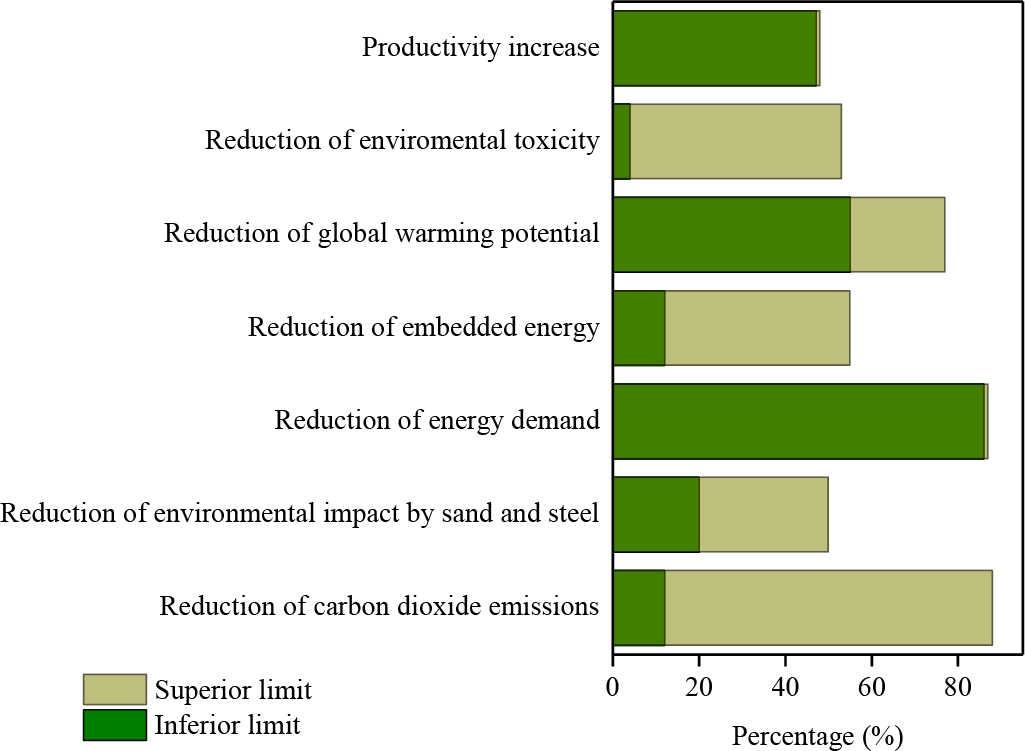
Figure 1. Ventajas en los aspectos del impacto ambiental de la impresión 3D de materiales cementantes con respecto del concreto convencional (adaptado de Motalebi y col., 2023).
Table 5. Comparison in sustainability aspects for conventional and 3D-printed concrete.
| Sustainability aspect | Construction material | |
| Masonry and conventional concrete (cast in place) | 3D-printed concrete | |
| Reduction of material waste (Buswell et al., 2007; Nematollahi et al., 2017; Sanjayan et al. 2019) | It can generate more waste on projects that require corrections due to outages or human errors. | It allows a significant reduction in waste due to the precision of the automation of the process, minimizing cuts. |
| Use of sustainable materials (Ding et al., 2020; Li et al., 2024; Xiao et al., 2021) | It normally uses conventional materials with a higher environmental impact due to the extraction of raw materials and the manufacturing process. It relies heavily on locally available materials, which may not be sustainable. | More sustainable construction materials can be used due to the design of the cementitious inks (e.g., concrete reinforced with natural fibers, recycled materials, etc.). |
| Energy efficiency (Abdalla et al., 2021; Alkhalidi et al., 2020; He et al., 2020) | Requires additional measures to improve energy efficiency, such as installing insulation after construction. Construction joints can represent energy leak points if not sealed properly. | The ability to integrate thermal insulation and other features improves the energy efficiency of the home. Reducing construction joints can decrease energy leakage points. |
| Durability and maintenance (Ahmed et al., 2023; de Souza et al., 2024; Schuldt et al., 2021) | Durability depends on the quality of the concrete associated with the workmanship. May require regular maintenance to repair cracks and prevent deterioration. | It can be more durable and require less long-term maintenance due to the uniformity and strength of the material. Lower risk of corrosion deterioration due to the use of non-metallic materials. |
| Carbon footprint (De Schutter et al., 2018; Khan et al., 2021; Mohan et al., 2022) | It may be higher due to the energy required to manufacture concrete and transport materials. Requires equipment with high consumption of fossil fuels. | It may be less due to the reduction in energy, waste and materials associated with the precision of the technology for dosing and printing cementitious inks. |
The preliminary results showed that only the cementitious ink presented a 77.5% reduction in the CO2 emissions associated with the OPC manufacturing process (Díaz-Aguilera, 2024), which must be added to the reduction related to a 3D-printing construction process. It is worth mentioning that this optimized mixture with 80%LS exceeded the OPC by 228.5 efficient design units (edu), according to a proposed EC indicator that considered mechanical, durability, and sustainability performance; while an optimized mixture with 30%LS surpassed it by 1147.2 edu (Díaz-Aguilera, 2024). Furthermore, another study of these optimized cementitious materials using high-purity MK showed a 42.6% reduction in production cost compared to a composite Portland cement (CPC) (Perez-Cortes and Escalante-Garcia, 2020). The above is an example of the cementitious inks under development in Nuevo León, Mexico (UANL-FIC, 2023), which suggests that 3DPCM technologies can be even more efficient in combination with other Mexican developments.
Likewise, the impact on the economy and working conditions must be considered when analyzing the sustainability of the 3DPCM. Initially, a mass use of the 3DPCM in Mexico would not be expected, which would drastically reduce the hiring of construction personnel. This is considered a disadvantage of 3 the DPCM, although it also suggests the need for an update in CI through specialized staff training (Amhed, 2023; De Schutter et al., 2018). However, the multiple advantages of the 3DPCM make it one of the most sustainable and profitable technologies to exploit, as confirmed by the exponential growth of investment in this technology that is currently being experienced, which is reflected in the number of companies that already operate in developed countries such as the USA, China, United Arab Emirates, Canada, Japan and Spain (ArchDaily, 2018; Be more 3D, 2024; Motalebi et al., 2023; Winsun, 2014). In fact, the company CEMEX (2022), in collaboration with the international printer company COBOD, announced in September 2023 the introduction of the first 3D concrete printer in Mexico in order to innovate in the development of inks made of concrete, which shows the interest in introducing 3DPCMC’s technology in the Mexican market. It is worth mentioning. It should be noted that acquiring and putting into operation a COBOD printer (2023) costs around $400,000-$1,000,000 dollars, making it relatively difficult to access in developing countries. The above means that 3DPCM technology is being intensively researched worldwide to progressively introduce it into the markets and the key is in the development of functional, robust, and durable 3D printers, as well as cementitious inks with printability, mechanical strength, durability, and low environmental impact (Robayo-Salazar et al., 2023).
Another aspect of interest related to the sustainability of 3DPCM is the cost of housing construction, therefore, a comparative analysis of cost/m2 between conventional construction and 3DPCM was conducted (Table 6), considering that: (i) the average cost for conventional housing in Mexico from 2019 to 2024 increased from $5,777.5-$6,213/m2 to $6,896.55-$9,266/m2, while the direct cost of social housing increased 2.07% from March 2023 to March 2024 (CMIC-CEICO, 2023; GAMA Arquitectura, 2024; GRUPO QVICK, 2023; Miranda, 2019). (ii) Kreiger et al. (2019) estimated for 3D-printed housing that their construction achieved a cost reduction of 10-25% or 25-37% compared to using masonry or conventional concrete, respectively; likewise, it was estimated that the cost reduction with respect to conventional construction reached 50% in India in 2023, while the average cost in Russia reached $4770/m2. On the other hand, in 2018 the company ICON printed 60 m2 houses for an average cost of $2,800/m2 in Austin, planning to reduce it to $1,200/m2 in El Salvador (EnteUrbano, 2020; Forbes México, 2018; Kreiger et al. 2019; Vijayalaxmi et al., 2023). Thus, for a medium and low socioeconomic stratum, it can be estimated that the cost in Mexico could be reduced from $6,000-$9,000/m2 to $1,700-$4,500/m2, additionally involving the reduction of waste on site, design flexibility and shorter construction time. It is worth mentioning that the general composition of the profit/cost ratio of constructions is around 2/1-3/1 and it can be established that 50% of the construction cost is for labor and 50% for materials.
Table 6. Comparison of cost/m2 for conventional and 3D-printing construction for Mexico.
| Product | Price per m2 of construction (MXN) | Caracteristics | Benefited population |
| Conventional construction housing (modular) | $6000 – $9,000 | These have a warranty for the first year; insulating characteristics; pre-established architectural and structural designs; high cost for the population in poverty and extreme poverty. | Low and middle class, individuals or couples with/without children |
| 3D-printed concrete housing | $1,700 – $4,500 | Reduction of waste on site; flexible architectural and structural designs; lower labor cost and construction time. |
A second analysis can be carried out considering that the performance of 3DPCM technologies allows (i) the construction of homes ensuring the quality and durability, as well as structural safety of the materials, including in the face of natural disasters, (ii) positively impacting credits and support regardless of its nature, this due to the reduction of housing costs, as well as (iii) providing the habitability characteristics stipulated by UN-Habitat (2019) and the IVNL (2021), especially bringing the goal of requiring 30% of income determined for affordable housing (UN-Habitat, 2019). Thus, it would be possible to finance a cost of $8,000-$14,000 dollars in 5-8 years (ArchDaily, 2015) when considering as an example the average income in NL (Gobierno de México, 2023a) and the cost of the project of the Architect Tatiana Bilbao, however, its project was designed for conventional construction, so using 3DPCM would mean an improvement in strength, durability, sustainability, costs, etc.
Therefore, the housing construction by 3DPCM promotes the scope of DASH in a way that had not been previously proposed in the CI, in contrast to diversifying economic supports for applicants, but not dealing with the main current core problem of housing: its cost. This would provide access of DASH to the most vulnerable sector of the population, but it also suggests the achievement of higher sustainability levels for the population with a higher income, since, for the cost of conventional commercial housing the following characteristics could be added: high energy efficiency technologies, self-healing or photocatalytic coatings cements for CO2 capture, smart windows, solar panels and heaters, bioclimatic designs using complex geometries, etc. However, there is a need for research and development of Mexican technology in terms of cementing inks and 3D printers based on EC's efficient design criteria, making these technologies available to the population and housing developers in a more affordable way in our country.
4.1. Circularity analysis of 3D-printed DASH: possible scenario for Mexico
In favor of the sustainable development of the country and based on Mexican technology, construction with 3DPCM promotes a drastic reduction in costs, which would be enough to provide DASH to PIBWL. This could significantly reduce socio-environmental problems with strategies such as: (i) taking advantage of current subsidies to acquire-improve-expand a home, facilitating access to financing and preventing delinquencies for smaller amounts, which would be more proportional to income of the PIBWL. This reduces financing times and, above all, allows respecting the limit of 30% of income established by UN-Habitat (2019) that determines affordable housing, as well as solving DQHS, which on the other hand supports the satisfaction of other basic needs. (ii) The efficiency of the construction process by 3DPCM results in the rapid generation of affordable housing, allowing the housing deficit to be reduced, even with high demand. This also promotes improved urban planning that achieves placement and avoids vacant housing built with 3DPCM. (iii) The access of the PIBWL to the DASH market mitigates the problem of informal housing (e.g., self-construction, lack of maintenance, precariousness, uncontrolled urban growth, little social integration, settlement in ecological preservation areas, vulnerability against natural phenomena, structural risk, little protection from the outside, etc.), due to compliance with the requirements for a decent home according to UN-Habitat and the Mexican Constitution, i.e., homes built using durable, strong and high-quality materials on 3DPCM floors, walls and ceilings, using an energy-efficient, structural and architectural design that optimizes the spaces, their functionality, energy consumption, comfort and the use of housing resources, complying with permits and ground construction regulations for formal housing developments, carried out under the specialized supervision of 3DPCM, ensuring access to public services and reducing overcrowding and housing backwardness. (iv) Likewise, it can provide solutions to the problems of improving and expanding housing, temporary housing, as well as public spaces in communities and neighborhoods. It should be noted that the 3D-printed elements have better properties compared to concrete blocks, bricks, or wood, which is why 3DPCM minimize the need for maintenance, extending the useful life and improving other affordable housing proposals such as that of the Architect Tatiana Bilbao (ArchDaily, 2015). (v) All of the above improves the life quality and health of the inhabitants, but also the reduction of the CI environmental impact could achieve sustainability goals while maintaining its leading role in the country in economic terms. In addition, strategic alliances and public policies should be created to facilitate the acquisition of 3D-printed DASH, mainly for PIBWL.
In terms of the SDGs (United Nations, 2015), the 3DPCM impacts by reducing: CO2 emissions, energy demand, waste generation, intensive use of natural resources; and increasing the reuse of by-products and local resources; as well as developing more efficient processes and technologies: (i) The 3DPCM allows the efficient use of construction materials, dosing and depositing precise amounts of water, cement, additives, stone aggregates, etc. This reduces quarry extraction, construction waste, as well as the CO2 emissions associated with the production of materials, which indirectly also promotes affordable cost of DASH. Likewise, the implementation of DASH prevents irregular settlements in eco-protected areas, promoting the controlled growth of cities. The above impacts the SDG-6 of clean water and sanitation, the SDG-7 of affordable and non-polluting energy, as well as the SDG-15 of life in terrestrial ecosystems. (ii) Since efficiency and environmental impact are optimized through the digitalization and automation of a multifunctional robot, and 3DPCM promotes modular construction, it impacts the SDG-9 on industry, innovation, and infrastructure, as well as the SDG-12 on responsible production and consumption are impacted. (iii) The construction of cities by 3D-printing mitigates the climate change due to low environmental impact practices, efficient, bioclimatic, and sustainable design, extension of durability, optimization of resources, etc. In addition, it requires strategic alliances between the public and private sectors to achieve the SDGs, the development of research and new Mexican technologies for the construction of DASH. This impacts the SDG-11 of sustainable cities and communities, the SDG-13 of climate action and the SDG-17 of alliances to achieve the SDGs. (iv) Other benefits of the 3DPCM are related to: the SDG-3 of health and well-being, by improving people's life quality; the SDG-8 of decent work and economic growth, by creating new economic opportunities, sustainable enterprises, and business models; the SDG-4 of quality education, because 3DPCMC's technological development allows students to simultaneously learn design, science, engineering, and manufacturing processes in a practical way.
5. CONCLUSIONS
The sustainable development of Mexico through the application of the Circular Economy in the Construction Industry provides solutions such as 3D-printing of cementitious mixtures, which would bring decent, affordable, and sustainable housing to the general population, meeting the Goals of Sustainable Development of the United Nations and the Federal Government. This is due to the various advantages associated with the automation of the construction process using a robot, highlighting (a) the reduction of labor, accidents and human errors, (b) the optimization in the use of materials and quality control of the properties due to the precision during the mixing, pumping and printing procedure of the cementitious mixtures, as well as (c) the high construction performance, which reduces construction times and allows modular construction through 3D-printed prefabricated parts. The above implies a significant reduction in environmental impact and costs (from $6,000-$9,000/m2 to $1,700-$4,500/m2) with respect to conventional construction according to current estimates but surpassing other sustainable proposals in quality due to mechanical performance and durability or matching the performance of conventional concrete by appropriately optimizing the properties of the 3D-printed elements. However, it is possible to achieve superior advantages by using (a) Mexican alternative cement technologies or waste materials for inks, (b) in addition to implementing, for the same cost as conventional commercial housing, advanced technologies of high energy efficiency, capture of CO2, eco-technologies, bioclimatic architectural designs, etc. It is expected that this work will contribute to the dissemination and discussion of national solutions for the integration of (i) the circular economy in the construction industry, (ii) achieving decent, affordable, and sustainable housing, as well as (iii) the development of Mexican technology for 3D-printers and cementing inks, giving rise to technology-based companies in this area.
6. ACKNOWLEDMENTS
J.H. Díaz-Aguilera, J.R. Zapata-Padilla, S. Mares-Chávez, F.D. Anguiano-Pérez, M.I. Velásquez-Hernández, E.E. Espino-Robles, J.I. Alvarado-López and J.A. Mendoza-Jiménez thank CONAHCYT for the scholarships provided to CVUs 929098, 946425, 1346629, 554927, 1041129, 1305949, 994896 y 591308, respectively.
8. REFERENCES
Abdalla, H., Fattah, K.P., Abdallah, M., Tamimi, A.K. (2021), Environmental Footprint and Economics of a Full-Scale 3D-Printed House. Sustainability. 13:11978. https://doi.org/10.3390/su132111978.
Adesina, A. (2020), Recent advances in the concrete industry to reduce its carbon dioxide emissions. Env. Challen. 1:100004. https://doi.org/10.1016/j.envc.2020.100004
Adesina, A. (2021), Circular Economy in the Concrete Industry. Build. Eng. 43:103233. https://doi.org/10.1016/j.jobe.2021.103233
Ahmed, G.H. (2023) A review of “3D concrete printing”: Materials and process characterization, economic considerations and environmental sustainability. J. Build. Eng. 66:105863. https://doi.org/10.1016/j.jobe.2023.105863
Alkhalidi, A, Hatuqay, D. (2020), Energy efficient 3D printed buildings: Material and techniques selection worldwide study. J. Build. Eng. 30:101286. https://doi.org/10.1016/j.jobe.2020.101286
ArchDaily (2015), Tatiana Bilbao’s $8,000 House Could Solve Mexico’s Social Housing Shortage. Accessed on September 28, 2023, at: Accessed on September 28, 2023, at: https://www.archdaily.com/775233/tatiana-bilbaos-8000-house-could-solve-mexicos-social-housing-shortage
ArchDaily (2018), Dubai planifica imprimir en 3D el 25% de sus nuevos edificios en 2025. Accessed on September 30, 2023, at: Accessed on September 30, 2023, at: https://www.archdaily.mx/mx/901205/dubai-planifica-imprimir-en-3d-el-25-percent-de-sus-nuevos-edificios-en-2025
ArchDaily (2021a), El futuro es ahora: Casas impresas en 3D comienzan a ser habitadas en los Países Bajos. Accessed on September 30, 2023, at: Accessed on September 30, 2023, at: https://www.archdaily.mx/mx/961093/el-futuro-es-ahora-casas-impresas-en-3d-comienzan-a-ser-habitadas-en-los-paises-bajos#:~:text=los%20Pa%C3%ADses%20Bajos-,El%20futuro%20es%20ahora%3A%20Casas%20impresas%20en%203D%20comienzan%20a,habitadas%20en%20los%20Pa%C3%ADses%20Bajos&text=Si%20hace%20algunos%20a%C3%B1os%20la,que%20ha%20llegado%20para%20quedarse.
ArchDaily (2021b), La estética de la automatización: análisis de una vivienda asequible impresa en 3D. Accessed on September 30, 2023, at: Accessed on September 30, 2023, at: https://www.archdaily.mx/mx/964468/la-estetica-de-la-automatizacion-analisis-de-una-vivienda-asequible-impresa-en-3d
Arunothayan, R., Nematollahi, B., Bong, S.H., Ranade, R., Sanjayan, J. (2020), Hardened Properties of 3D Printable Ultra-High Performance Fiber-Reinforced Concrete for Digital Construction Applications. Rheol. Proc. Constr. Mater. 23: 355-362). https://doi.org/10.1007/978-3-030-22566-7_41
Baskar, S., Sharma, R., Chinnappan, A., Sehrawat, R. (2021), “Handbook of Solid Waste Management”, Singapore, Springer. https://doi.org/10.1007/978-981-15-7525-9_64-1
Baz, B., Aouad, G., Leblond, P., Al-Mansouri, O., D’hondt, M., Remond, S. (2020). Mechanical assessment of concrete - Steel bonding in 3D printed elements. Constr. Build. Mater. 256:119457. https://doi.org/10.1016/j.conbuildmat.2020.119457
Be more 3D (2024), Por fin construcción y sencillez unidas. Accessed on April 11, 2024, at: Accessed on April 11, 2024, at: https://bemore3d.com/
Buswell, R.A., Soar, R.C, Gibb, A.G.F., Thorpe, A. (2007), Freeform Construction: Mega-scale Rapid Manufacturing for construction. Automation in Construction, Volume 16, Issue 2, Pages 224-231. https://doi.org/10.1016/j.autcon.2006.05.002.
CEMEX (2022), CEMEX es la primera compañía que introduce impresión 3D con concreto en México. Accessed on September 1, 2023, at: Accessed on September 1, 2023, at: https://www.cemexmexico.com/-/cemex-es-primera-compa%C3%B1%C3%ADa-que-introduce-impresi%C3%B3n-3d-con-concreto-en-m%C3%A9xico#:~:text=CEMEX%20es%20Primera%20Compa%C3%B1%C3%ADa%20que%20Introduce%20Impresi%C3%B3n%203D%20con%20Concreto%20en%20M%C3%A9xico,-Monterrey%2C%20M%C3%A9xico%2004&text=CEMEX%2C%20S.A.B.%20de%20C.V.%20(%E2%80%9C,y%20de%20grado%20de%20construcci%C3%B3n.
CentroUrbano (2023), Nuevo León presenta su Programa Especial de Vivienda 2022-2027. Accessed on September 29, 2023, at: Accessed on September 29, 2023, at: https://centrourbano.com/vivienda/nuevo-leon-programa-vivienda/
Cicione, A., Kruger, J., Richard Walls, S., Van Zijl, G. (2021), An experimental study of the behavior of 3D printed concrete at elevated temperatures. Fire Safety J. 120:103075. https://doi.org/10.1016/j.firesaf.2020.103075.
CMIC-CEICO (2023), Principales variaciones en el precio de los insumos y su impacto en las obras. Accessed on April 17, 2024, at: Accessed on April 17, 2024, at: https://www.cmic.org.mx/comisiones/Tematicas/costosyp/Informes_IPP/2023/CEICO_Informe_Octubre_2023.pdf
Colorado, H. A., Velásquez, E. I. G., Monteiro, S. N. (2020), Sustainability of additive manufacturing: the circular economy of materials and environmental perspectives. J. Mater. Res. Tech. 9(4):8221-8234. https://doi.org/10.1016/j.jmrt.2020.04.062
De Schutter, G., Lesage, K., Mechtcherine, V., Nerella, V.N., Habert, G., Agusti-Juan, I. (2018), Vision of 3D printing with concrete—Technical, economic and environmental potentials. Cem. Concr. Res. 112:25-36. https://doi.org/10.1016/j.cemconres.2018.06.001
De Souza, E.A., Borges, P.H., Stengel, T., Nematollahi, B., Bos, F.P. (2024), 3D printed sustainable low-cost materials for construction of affordable social housing in Brazil: Potential, challenges, and research needs. J. Build. Eng. 87:108985. https://doi.org/10.1016/j.jobe.2024.108985
Díaz-Aguilera, J.H. (2024), “Estudio del diseño eficiente, optimización, durabilidad y sostenibilidad de una pasta de cemento activado alcalinamente con base en metacaolín y piedra caliza”, PhD Thesis, Universidad Autónoma de Nuevo León.
Ding, T., Xiao, J., Zou, S., Zhou, X (2020), Anisotropic behavior in bending of 3D printed concrete reinforced with fibers. Compos. Struct., 254:112808. https://doi.org/10.1016/j.compstruct.2020.112808
El Economista. (2022a). Hay que hacer algo rápido: Gene Towle sobre la falta de oferta de vivienda social. Accessed on August 29, 2023, at: Accessed on August 29, 2023, at: https://www.eleconomista.com.mx/econohabitat/Hay-que-hacer-algo-rapido-Gene-Towle-sobre-la-falta-de-oferta-de-vivienda-social-20220325-0091.html
El Economista (2022b), Canadevi advierte rezago del 30% en colocación de vivienda en Nuevo León. Accessed on September 25, 2023, at: Accessed on September 25, 2023, at: https://www.eleconomista.com.mx/estados/Canadevi-advierte-rezago-del-30-en-colocacion-de-vivienda-en-Nuevo-Leon-20220921-0129.html
El Economista (2023), Nuevo León se presentará un programa para complementar créditos por déficit de 16,000 viviendas. Accessed on September 25, 2023, at: Accessed on September 25, 2023, at: https://www.eleconomista.com.mx/estados/Nuevo-Leon-se-presentara-un-programa-para-complementar-creditos-por-deficit-de-16000-viviendas-20230423-0008.html
El Inaty, F., Baz, B.A., Aouad, G. (2022). Long-term durability assessment of 3D printed concrete. J. Adhesion Sci. Technol. 37:1-16. https://doi.org/10.1080/01694243.2022.2102717
EnteUrbano (2020), ¿Cuánto cuesta una casa impresa en 3D?. Accessed on April 17, 2024, at: Accessed on April 17, 2024, at: https://enteurbano.com/cuanto-cuesta-una-casa-impresa-en-3d/#google_vignette
European Parliament (2023), Circular economy: definition, importance and benefits. Accessed 17 April 2024 in: Accessed 17 April 2024 in: https://www.europarl.europa.eu/topics/es/article/20151201STO05603/economia-circular-definicion-importancia-y-beneficios
Forbes México (2018), 100 casas serán construidas con impresoras 3D en El Salvador. Accessed on April 17, 2024, at: Accessed on April 17, 2024, at: https://www.forbes.com.mx/casas-seran-construidas-con-impresoras-3d-en-el-salvador/
Fořt, J., Černý, R. (2020), Transition to circular economy in the construction industry: Environmental aspects of waste brick recycling scenarios. Was. Manag. 118:510-520. https://doi.org/10.1016/j.wasman.2020.09.004
García-Alvarado, R., Martínez, A., González, L., Auat, F. (2020), Projections of 3D-printed construction in Chile. Rev. Ing. Constr. 25:60-72. http://dx.doi.org/10.4067/S0718-50732020000100060
GAMA Arquitectura (2024), ¿Cuánto cuesta construir una casa en México?. Accessed on April 17, 2024, at: Accessed on April 17, 2024, at: https://www.tallergama.com/cuanto-cuesta-construir-una-casa/
Gobierno de México (2023a), Data México: Nuevo León. Accessed on September 27, 2023, at: Accessed on September 27, 2023, at: https://www.economia.gob.mx/datamexico/es/profile/geo/nuevo-leon-nl
Gobierno de México (2023b), Conferencia Matutina Jueves 9 de febrero de 2023. Accessed on October 5, 2023, at: Accessed on October 5, 2023, at: https://www.youtube.com/watch?v=_et4AjkIs8w
GRUPO QVICK (2023), ¿Cuánto cuesta construir una casa en 2024? - MéxicoAccessed on April 18, 2024 at: GRUPO QVICK (2023), ¿Cuánto cuesta construir una casa en 2024? - MéxicoAccessed on April 18, 2024 at: https://www.grupoqvick.com/post/cu%C3%A1nto-cuesta-construir-una-casa-en-2023#:~:text=Construir%20una%20casa%20de%20inter%C3%A9s,es%20de%20%2423%2C762.37%2F%20m2%20promedio
He, Y., Zhang, Y., Zhang, C., Zhou, H. (2020), Energy-saving potential of 3D printed concrete building with integrated living wall. Energy Build. 222:110110. https://doi.org/10.1016/j.enbuild.2020.110110
HOLCIM México (2024), Impresión 3d en la construcción: transformando el futuro con holcim. Accessed on April 18, 2024, at: Accessed on April 18, 2024, at: https://www.holcim.com.mx/impresion-3d
Hossain, M. U., Ng, S. T., Antwi-Afari, P., Ben Amor (2020), Circular economy and the construction industry: Existing trends, challenges and prospective framework for sustainable construction. Ren. Sust. Ener. Rev. 130:109948. https://doi.org/10.1016/j.rser.2020.109948
INEGI (2020), Panorama sociodemográfico de México 2020. Accessed on September 26, 2023, at: Accessed on September 26, 2023, at: https://www.inegi.org.mx/contenidos/productos/prod_serv/contenidos/espanol/bvinegi/productos/nueva_estruc/702825197926.pdf
INEGI (2021), Encuesta Nacional de Vivienda 2020. Accessed on September 27, 2023, at: Accessed on September 27, 2023, at: https://inegi.org.mx/contenidos/saladeprensa/boletines/2021/envi/ENVI2020.pdf
INEGI (2023), Indicador mensual de la actividad industrial por entidad federativa 2023. Accessed on September 1, 2023, at: Accessed on September 1, 2023, at: https://www.inegi.org.mx/contenidos/saladeprensa/boletines/2023/imaief/imaief2023_06.pdf
Instituto de la Vivienda (2021), Diagnostico Instituto de la Vivienda de Nuevo León. Accessed on October 9, 2023, at: Accessed on October 9, 2023, at: https://pbr-sed.nl.gob.mx/sites/default/files/diagnostico_ivnl.pdf
Interempresas (2020), Arquitectura y construcción. Accessed on September 28, 2023, at: Accessed on September 28, 2023, at: https://www.interempresas.net/Construccion/Articulos/298814-Cada-metro-cuadrado-construido-en-edificacion-residencial-supone-441-Kg-de-CO2.html
Jo., J.H., Jo, B.W., Cho, W., Kim, J.H. (2020). Development of a 3D Printer for Concrete Structures: Laboratory Testing of Cementitious Materials. Int. J. Concr. Struct. Mater. 14:13. https://doi.org/10.1186/s40069-019-0388-2
Joh, C., Lee, J., Bui, T.Q., Park, J., Yang, I.H. (2020), Buildability and Mechanical Properties of 3D Printed Concrete. Materials, 13(21):4919. https://doi.org/10.3390/ma13214919
Kaliyavaradhan, S. K., Tung-Chai, L., Mo, K. H. (2020), CO2 sequestration of fresh concrete slurry waste: Optimization of CO2 uptake and feasible use as a potential cement binder. J. CO2 Util. 42:101330. https://doi.org/10.1016/j.jcou.2020.101330
Khan, S.A., Koç, M., Al-Ghamdi, S.G. (2021), Sustainability assessment, potentials and challenges of 3D printed concrete structures: A systematic review for built environmental applications. J. Clean. Prod. 303:127027. https://doi.org/10.1016/j.jclepro.2021.127027
Kreiger, E., Kreiger, M., Case, M. (2019), Development of the Construction Processes for Reinforced Additively Constructed Concrete. Additive Manufact. 28:39-49. https://doi.org/10.1016/j.addma.2019.02.015
Liu, C., Yue, S., Zhou, C., Sun, H., Deng, S., Gao, F., Tan, Y. (2021), Anisotropic mechanical properties of extrusion-based 3D printed layered concrete. J. Mater. Sci. 56(30):16851-16864. https://doi.org/10.1007/s10853-021-06416-w
Lozano, G.O., Sánchez, O.S. (2022), Vivienda en México, un problema de calidad, de habitabilidad, del barrio y de la ciudad. Variantes a la medición del rezago. Accessed on September 25, 2023, at: Accessed on September 25, 2023, at: https://revistaeypp.flacso.org.ar/files/revistas/1667932268_143-171.pdf
Ma, G., Li, Z., Wang, L., Wang, F., Sanjayan., J. (2019), Mechanical anisotropy of aligned fiber reinforced composite for extrusion-based 3D printing. Constr. Build. Maters. 202:770-783. https://doi.org/10.1016/j.conbuildmat.2019.01.008
MARQ (2021). Se logra impresión 3D del concreto más resistente. Accessed on September 1, 2023, at: Accessed on September 1, 2023, at: https://marq.mx/es/se-logra-impresion-3d-del-concreto-mas-resistente/
Marsh, A. T. M., Velenturf, A. P. M., Bernal, S. A. (2022), Circular Economy strategies for concrete: implementation and integration. J. Clean. Produc. 362:132486. https://doi.org/10.1016/j.jclepro.2022.132486
Murcia, D.H., Genedy, M., Taha., M.M.R. (2020), Examining the significance of infill printing pattern on the anisotropy of 3D printed concrete. Constr. Build. Maters. 262:120559. https://doi.org/10.1016/j.conbuildmat.2020.120559
Maury-Ramírez, A., Illera-Perozo, D., Mesa, J. A. (2022), Circular Economy in the Construction Sector: A Case Study of Santiago de Cali (Colombia). Sust. 14(3):1923. https://doi.org/10.3390/su14031923
Mendoza-Rangel, J.M., Díaz-Aguilera, J.H. (2023), Circular economy in the Latin American cement and concrete industry: a sustainable solution of design, durability, materials, and processes. Revista ALCONPAT. 13:328-348. https://doi.org/10.21041/ra.v13i3.697
Milenio (2018), NL, entre los estados que generan más basura: Inegi. Accessed on September 26, 2023, at: Accessed on September 26, 2023, at: https://www.milenio.com/estados/nl-entre-los-estados-que-generan-mas-basura-inegi
Miranda, P.E. (2019), “Análisis de costos entre vivienda de interés social vertical y vivienda de interés social horizontal en San Juan del Río”, Bachelor thesis, Universidad Autónoma de Queretaro.
Mohan, M.K., Rahul, A.V., van Dam, B., Zeidan, T., De Schutter, G., Van Tittelboom, K. (2022) Performance criteria, environmental impact and cost assessment for 3D printable concrete mixtures. Resour. Conserv. Recycl. 181:106255. https://doi.org/10.1016/j.resconrec.2022.106255
Moelich, G.M., Kruger, J., Combrinck, R. (2020), Plastic shrinkage cracking in 3D printed concrete. Compos. Part B: Eng., 200:108313. https://doi.org/10.1016/j.compositesb.2020.108313.
Motalebi, A., Khondoker, M.A.H., Kabir, G. (2023). A Systematic Review of Life Cycle Assessments of 3D Concrete Printing. Sust. Operat. Computs. 5:41-50. https://doi.org/10.1016/j.susoc.2023.08.003
Natives3D (2018). Sika, el especialista en impresión 3D de concreto. Accesado el 1 de septiembre de 2023 en: Accesado el 1 de septiembre de 2023 en: https://www.3dnatives.com/es/sika-impresion-3d-de-concreto-220520182/
Nematollahi, B., Xia, M., Sanjayan, J. (2017), “Current Progress of 3D Concrete Printing Technologies.” en: 34th ISARC, Taipei (Taiwan), pp. 260-267. https://doi.org/10.22260/ISARC2017/0035.
Nodehi, M., Aguayo, F., Nodehi, S.E., Gholampour, A., Ozbakkaloglu, T., & Gencel, O. (2022). Durability properties of 3D printed concrete (3DPC). Autom. Constr. 142:104479. https://doi.org/10.1016/j.autcon.2022.104479
NoParast, M., Hematian, M., Ashrafian, A., Amiri, M. J. T., Jafari, H. A. (2021), Development of a non-dominated sorting genetic algorithm for implementing circular economy strategies in the concrete industry. Sust. Prod. & Cons. 27:933-946. https://doi.org/10.1016/j.spc.2021.02.009
OSHA (2022), Commonly Used Statistics | Occupational Safety and Health Administration. Accesado el 31 de agosto de 2023 en: Accesado el 31 de agosto de 2023 en: https://www.osha.gov/data/commonstats
Özalp, F., Yilmaz, H.D. (2020), Fresh and Hardened Properties of 3D High-Strength Printing Concrete and Its Recent Applications. Iran. J. Sci. Technol. Trans. Civ. Eng., 44(S1):319-330. https://doi.org/10.1007/s40996-020-00370-4
Perales-Santillan, M.E., Díaz-Aguilera, J.H., Mendoza-Rangel, J.M. (2024), Evaluation of the rheological behavior for alkaline-activated cements of metakaolin and limestone for its potential application in 3D printing. Iran. J. Sci. Technol. Trans. Civ. Eng. https://doi.org/10.1007/s40996-024-01363-3
Paz-Pérez, C.A. (2016), “El impacto de la sustentabilidad en la vivienda en serie de nuevo león”, Masters Thesis, Universidad Autónoma de Nuevo León.
Pérez-Cortes, P., Escalante-García, J.I. (2020), Design and optimization of alkaline binders of limestone-metakaoline A comparison of strength, microstructure and sustainability with portland cement and geopolymers. J. Crean. Prod. 273:123118. https://doi.org/10.1016/j.jclepro.2020.123118
Rahul, A.V., Santhanam, M., Meena, H., y Ghani, Z. (2019), Mechanical characterization of 3D printable concrete. Constr. Build. Mater., 227:116710. https://doi.org/10.1016/j.conbuildmat.2019.116710
Robayo-Salazar, R., Mejía de Gutiérrez, R., Villaquirán-Caicedo, M.A., Arjona, S.D. (2023), 3D printing with cementitious materials: Challenges and opportunities for the construction sector. Autom. Constr. 146:104693. https://doi.org/10.1016/j.autcon.2022.104693
Rosas-Díaz, F., García-Hernández, D.G., Mendoza-Rangel, J.M., Terán-Torres, B., Galindo-Rodríguez, S.A., Juárez-Alvarado, C.A. (2022), Development of a Portland Cement-Based Material with Agave salmiana Leaves Bioaggregate. Maters. 17:6000. https://doi.org/10.3390/ma15176000
Ruiz-Jaramillo, C. (2021), “Development of a cement-based extrusion system for application in 3D printing”, Tesis de Maestría, Instituto Tecnológico y de Estudios Superiores de Monterrey.
Şahin, H. G., Mardani-Aghabaglou, A. (2022), Assessment of materials, design parameters and some properties of 3D printing concrete mixtures; a state-of-the-art review. Constr. Build. Maters. 316:125865. https://doi.org/10.1016/j.conbuildmat.2021.125865
Sanjayan, J.G., Nazari, A., Nematollahi, B. (2019), “3D concrete printing technology: construction and building applications”, MA: Butterworth-Heinemann, Cambridge, England.
Schuldt, S.J., Jagoda, J.A., Hoisington, A.J., Delorit, J.D. (2021), A systematic review and analysis of the viability of 3D-printed construction in remote environments. Autom. Constr. 125:103642. https://doi.org/10.1016/j.autcon.2021.103642
Secretaría de Desarrollo Sustentable (2020), Norma ambiental estatal NAE-SDS-002-2019. Accessed on September 30, 2023 at: Accessed on September 30, 2023 at: http://aire.nl.gob.mx/docs/normatividad/NAE-SDS-002-2019.pdf
Senado de la República (2021), El 50 por ciento de las emisiones contaminantes pertenecen al sector de la construcción. Accessed on September 26, 2023 at: Accessed on September 26, 2023 at: http://comunicacion.senado.gob.mx/index.php/informacion/boletines/50135-el-50-por-ciento-de-las-emisiones-contaminantes-pertenecen-al-sector-de-la-construccion.html
Sikora, P., Techman, M., Federowicz, K., El-Khayatt, A.M., Saudi, H.A., Elrahman, M.A., Hoffmann, M., Stephan, D., Chung, S.Y. (2022) Insight into the microstructural and durability characteristics of 3D printed concrete: Cast versus printed specimens. C. Stud. Constr. Maters. 17:e01320. https://doi.org/10.1016/j.cscm.2022.e01320
Song, H., Li, X. (2021). An Overview on the Rheology, Mechanical Properties, Durability, 3D Printing, and Microstructural Performance of Nanomaterials in Cementitious Composites. Materials. 14:2950. https://doi.org/10.3390/ma14112950
Tecnológico de Monterrey. (2021). Los matices de la vivienda en México. Accessed on September 25, 2023 at: Accessed on September 25, 2023 at: https://futurociudades.tec.mx/es/los-matices-de-la-vivienda-en-mexico
UANL-FIC (2023), 1er Simposio del Cuerpo Académico Consolidado de Tecnología del Concreto “La Industria de la Construcción y la Economía Circular: Estrategias y Avances en Sostenibilidad”. Accessed 21 May 2024 in: Accessed 21 May 2024 in: https://fic.uanl.mx/1er-simposio-cactc2023/.
UN-Habitat (2019), Elements of adequate housing. Accessed 25 September 2023 in: Accessed 25 September 2023 in: https://onuhabitat.org.mx/index.php/elementos-de-una-vivienda-adecuada
United Nations (2015), Sustainable development goals. Accessed 1 September 2023 in: Accessed 1 September 2023 in: https://www.un.org/sustainabledevelopment/es/objetivos-de-desarrollo-sostenible/
UNEP (2020), Building sector emissions hit record high in 2019: UN report. Accessed 28 September 2023 in: Accessed 28 September 2023 in: https://www.unep.org/es/noticias-y-reportajes/comunicado-de-prensa/emisiones-del-sector-de-los-edificios-alcanzaron-nivel#:~:text=Eficiencia%20de%20recursos-,Emisiones%20del%20sector%20de%20los%20edificios%20alcanzaron%20nivel,2019%3A%20informe%20de%20la%20ONU&text=La%20operaci%C3%B3n%20y%20construcci%C3%B3n%20de,2%20relacionadas%20con%20la%20energ%C3%ADa.
Van Breugel, K. (2017). “Ageing Infrastructure and Circular Economy: Challenges and Risks”, in: Proceedings of the 2nd World Congress on Civil, Structural, and Environmental Engineering, CSEE’17, Barcelona (España), pp. 1-8.
Van Der Putten, J., De Volder, M., Van den Heede, P., De Schutter, G., Van Tittelboom, K. (2020), 3D Printing of Concrete: The Influence on Chloride Penetration, RILEM Inter. Conf. Concr. Digital Fabric. 28(2):500-507. https://doi.org/10.1007/978-3-030-49916-7_51
Velvizhi, G., Shanthakumar, S., Das, B., Pugazhendhi, A., Priya, T.S., Ashok, B., Nanthagopal, K., Vignesh, R., Karthick, C. (2020), Biodegradable and non-biodegradable fraction of municipal solid waste for multifaceted applications through a closed loop integrated refinery platform: Paving a path towards circular economy. Sci. Total Environ. 731:138049. https://doi.org/10.1016/j.scitotenv.2020.138049
Villagrán‐Zaccardi, Y., Pareja, R., Rojas, L., Irassar, E., Torres‐Acosta, A., Tobón, J., John, V.M. (2022), Overview of cement and concrete production in Latin America and the Caribbean with a focus on the goals of reaching carbon neutrality. RILEM techn. Let. 7:30-46. https://doi.org/10.21809/rilemtechlett.2022.155
Vijayalaxmi, J., Parth, S. (2023), Comparative analysis of concrete 3D printing and conventional construction technique for housing. Innov. Proc. Mater. Additive Manufac. 177-190. https://doi.org/10.1016/B978-0-323-86011-6.00011-8
WINSUN (2014), Company news. Accesado el 1 de septiembre de 2023 en: Accesado el 1 de septiembre de 2023 en: http://www.winsun3d.com/En/News/index/p1/2
Wolfs, R.J.M., Bos, F.P., Salet, T.A.M. (2019), Hardened properties of 3D printed concrete: The influence of process parameters on interlayer adhesion. Cem. Concr. Res., 119:132-140. https://doi.org/10.1016/j.cemconres.2019.02.017
Xiao, J., Han, N., Zhang, L., Zou, S. (2021), Mechanical and microstructural evolution of 3D printed concrete with polyethylene fiber and recycled sand at elevated temperatures. Constr. Build. Mater. 293:123524. https://doi.org/10.1016/j.conbuildmat.2021.123524
Yang, M., Chen, L., Wang, J., Msigwa, G., Osman, A.I., Fawzy, S., Rooney, D.W., Pow-Seng, Y. (2022), Circular economy strategies for combating climate change and other environmental issues. Env. Chem. Let. 21:55-80. https://doi.org/10.1007/s10311-022-01499-6
Ye, J., Cui, C., Yu, J., Yu, K., Xiao, J. (2021), Fresh and anisotropic-mechanical properties of 3D printable ultra-high ductile concrete with crumb rubber. Compos. Part B: Eng., 211:108639. https://doi.org/10.1016/j.compositesb.2021.108639
Zhang, Y., Zhang, Y., Yang, L., Liu, G., Chen, Y., Yu, S., Du, H. (2021), Hardened properties and durability of large-scale 3D printed cement-based materials. Mater. Struct. 54:1-14. https://doi.org/10.1617/s11527-021-01632-x